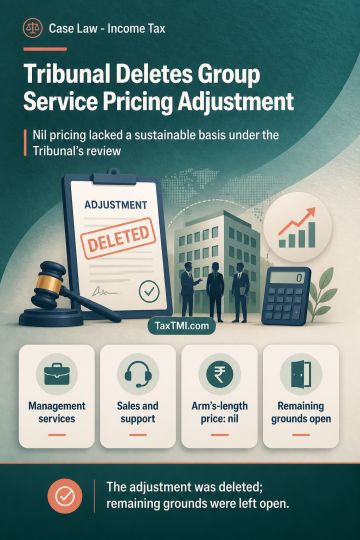
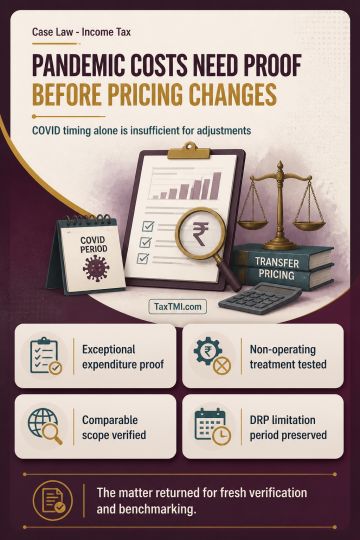
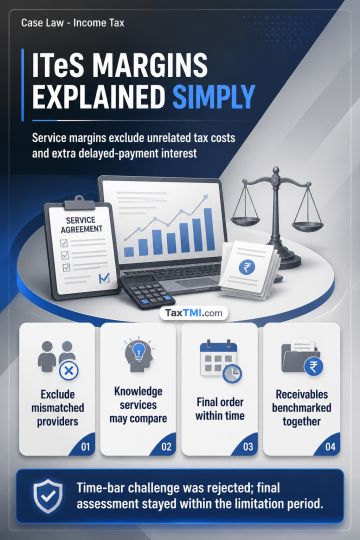
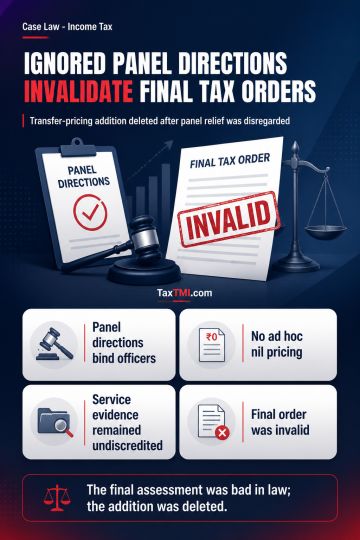
Transfer-pricing treatment of ITeS margins excludes pass-through tax recoveries and separate delayed-receivables interest after working-capital adjust...
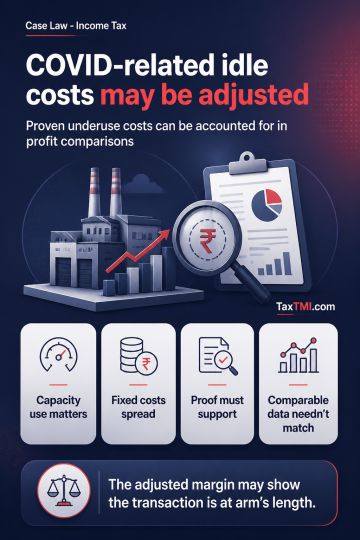
Capacity-utilisation adjustments under TNMM can neutralise substantiated COVID-related idle costs where underutilisation materially affects profitabil...
TNMM functional comparability requires excluding rice manufacturers from a pure Basmati rice trader's benchmark and recognising operating export recei...
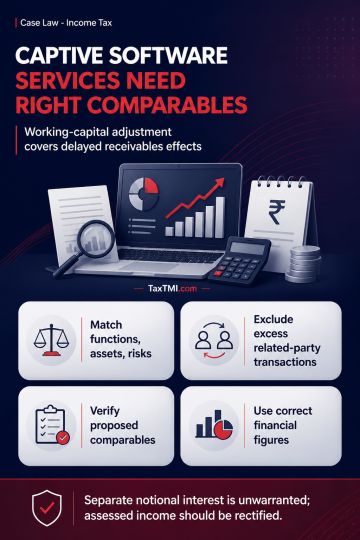
Working-capital adjustment subsumes delayed-receivable effects in TNMM benchmarking of captive software-development services, avoiding separate notion...
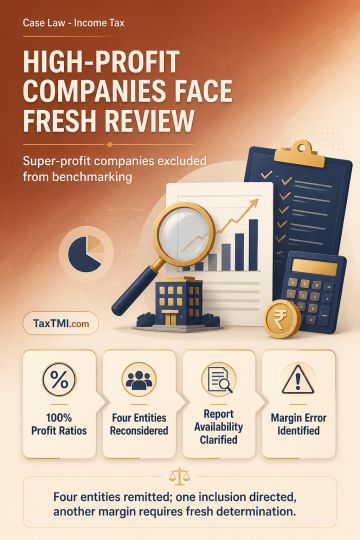
Transfer-pricing comparability requires exclusion of financially illogical super-profit comparables and correction of unsupported annual-report and ma...
Charitable character assessment preserves Section 80G approval despite inclusive spiritual teachings and incidental religious expenditure within the s...
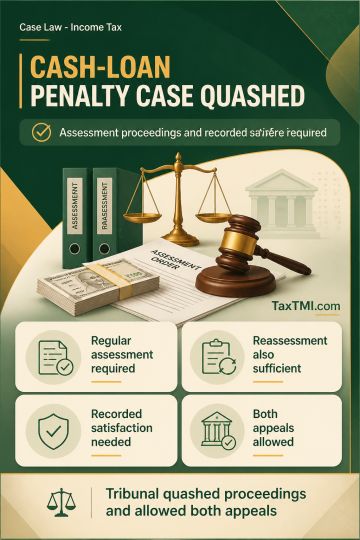
Penalty proceedings for cash-loan acceptance require assessment proceedings and recorded Assessing Officer satisfaction; absent these, the proceedings...
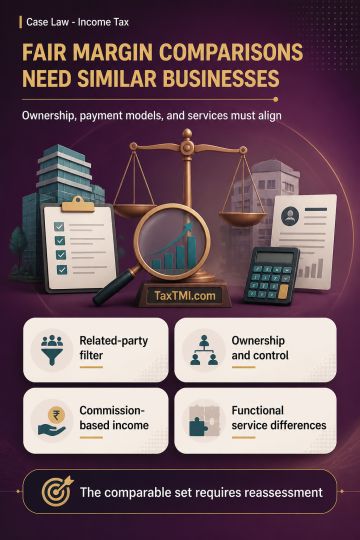
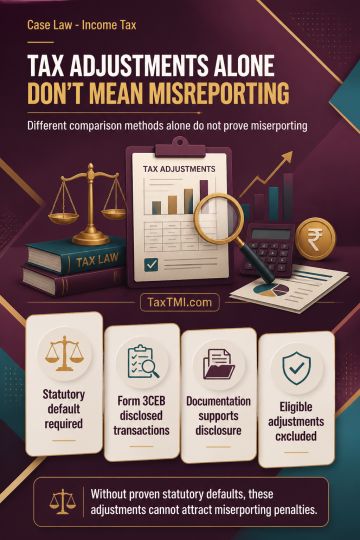
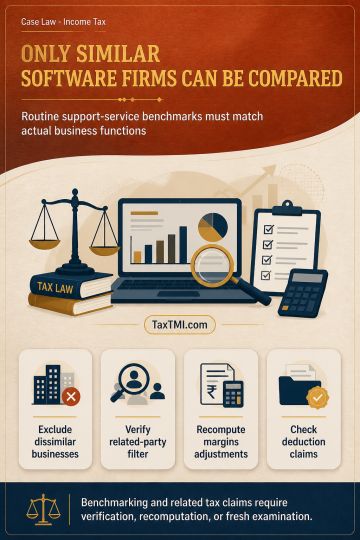
Functional comparability governs software-service benchmarking: dissimilar companies are excluded, while related-party filters, margins and working-ca...
Page of 4920
Press 'Enter' after typing page number.
2001 to 2020 of 98394 Results
❮
❯
❯❯
0 / 200
Expand Note
Add to Folder
No Folders have been created
+
Are you sure you want to delete "My most important" ?
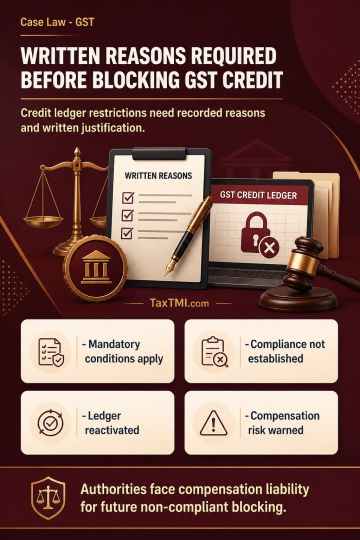
Rule 86A permits restriction on debit of input tax credit in an electronic credit ledger only when its prescribed conditions are met, including recorded reasons to believe and reasons in writing. The High Court found that the authorities could not establish compliance with these mandatory requirements before blocking the ledger. As the statutory period had expired and the ledger had been reactivated, the writ petition was disposed of exceptionally upon acceptance of an unconditional apology. The High Court warned that any future non-compliant blocking of credit would expose the authorities to appropriate compensation liability.
Rule 86A permits restriction on debit of input tax credit in an electronic credit ledger only when its prescribed conditions are met, including recorded reasons to believe and reasons in writing. The High Court found that the authorities could not establish compliance with these mandatory requirements before blocking the ledger. As the statutory period had expired and the ledger had been reactivated, the writ petition was disposed of exceptionally upon acceptance of an unconditional apology. The High Court warned that any future non-compliant blocking of credit would expose the authorities to appropriate compensation liability.
Note: It is a system-generated summary and is for quick reference only.
 TaxTMI
 TaxTMI

 of 4920