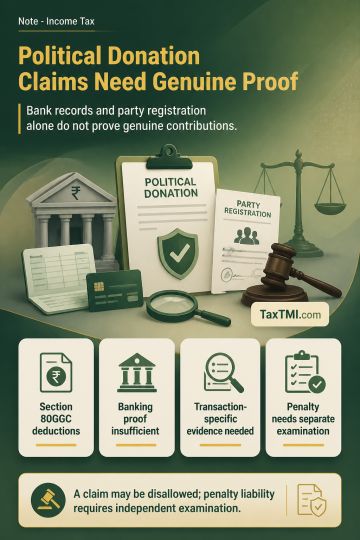
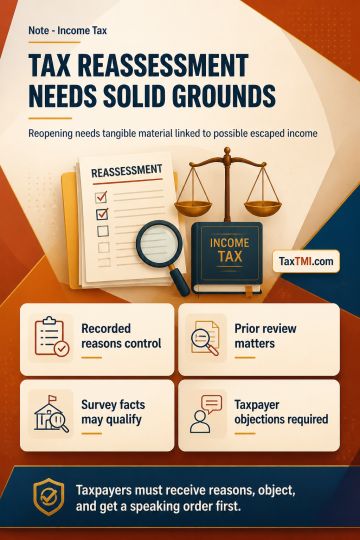
Political contribution deductions require genuine transactions; banking records and party registration alone cannot defeat evidence of accommodation e...
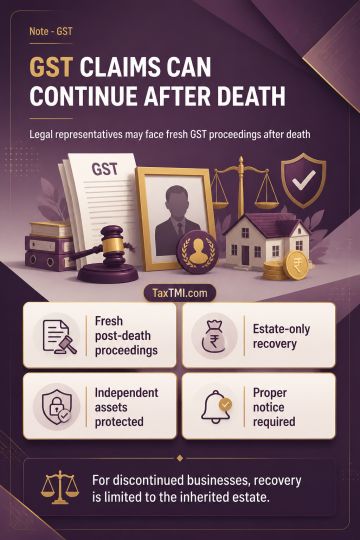
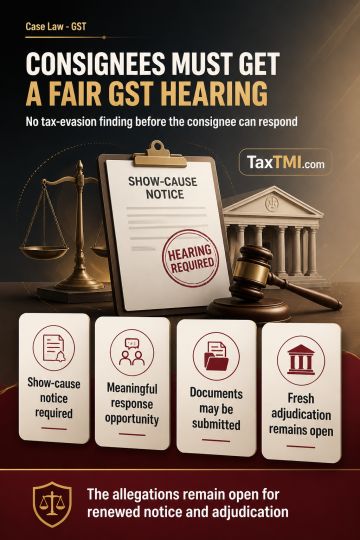
Post-death GST liability permits fresh proceedings against legal representatives, while discontinued-business recovery remains limited to the inherite...
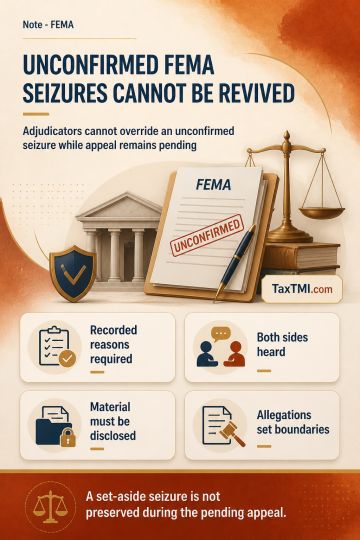
Non-confirmation of FEMA seizure prevents adjudicators from overriding pending appellate findings on recorded reasons and suspected foreign asset hold...
Physical and mechanical beneficiation that removes foreign matter and concentrates mineral content was treated as manufacture under Chapter Note 4 to Chapter 26, and the goods were classifiable as concentrates. Despite failure to follow CT-3 and related procedure, duty-free clearances to 100% EOUs could not be denied because the lapse arose from a bona fide belief that the goods were not dutiable, and the law did not require an impossible act. The department also failed to prove that the disputed clearances were not as such supplies, so those sales were excluded from turnover. The extended limitation period was rejected because suppression, clandestine removal, and intent to evade duty were not established in an interpretational dispute, and the demand, interest and penalty were set aside.
Physical and mechanical beneficiation that removes foreign matter and concentrates mineral content was treated as manufacture under Chapter Note 4 to Chapter 26, and the goods were classifiable as concentrates. Despite failure to follow CT-3 and related procedure, duty-free clearances to 100% EOUs could not be denied because the lapse arose from a bona fide belief that the goods were not dutiable, and the law did not require an impossible act. The department also failed to prove that the disputed clearances were not as such supplies, so those sales were excluded from turnover. The extended limitation period was rejected because suppression, clandestine removal, and intent to evade duty were not established in an interpretational dispute, and the demand, interest and penalty were set aside.
Note: It is a system-generated summary and is for quick reference only.
 TaxTMI
  TaxTMI