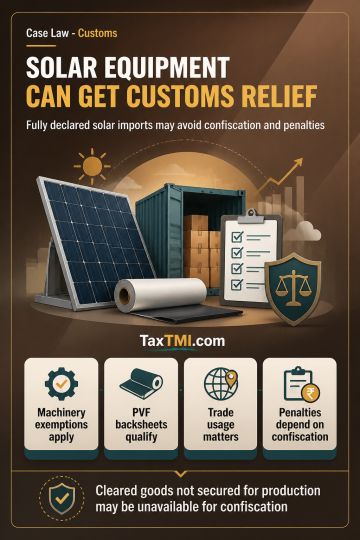
Customs exemptions cover photovoltaic assembly machinery and PVF backsheets, while fully declared cleared imports may avoid confiscation and penalties...
Specific tariff classification for LCD devices overrides treatment as electricity-meter parts, defeating differential duty, extended limitation, and p...
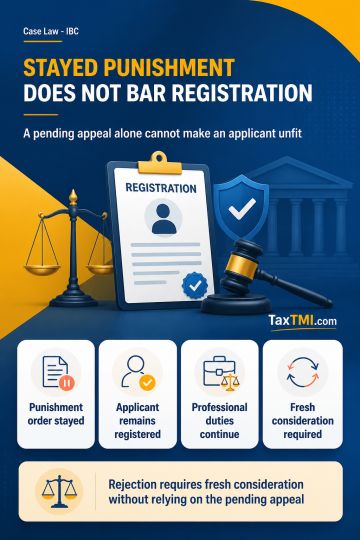
Stayed disciplinary punishment does not establish unfitness for insolvency professional registration; reconsideration must disregard mere pendency of ...
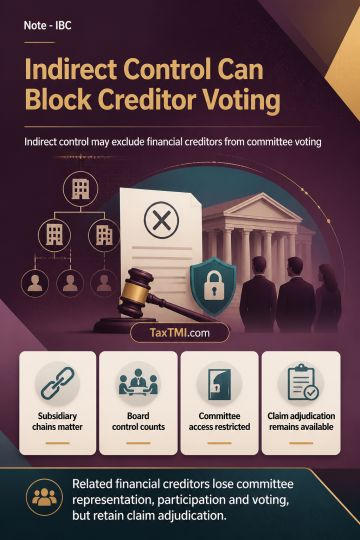
Indirect corporate control can create related-party status, excluding financial creditors from Committee of Creditors representation, participation an...
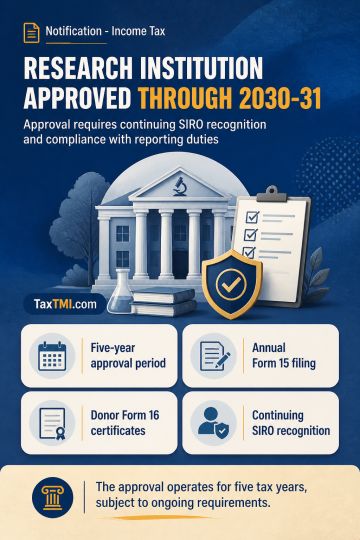
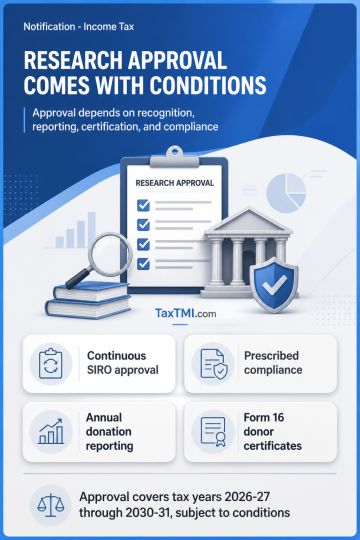
Scientific research association approval requires continuing SIRO status, annual donation reporting, and donor certificates for the approved foundatio...
Scientific research institution approval is conditional on SIRO recognition, annual donation reporting, donor certification, and prescribed compliance...
Cargo originating from SEZ and lying at gateway ports because of disruption in maritime routes may be handled through a simplified procedure under Section 143AA of the Customs Act, 1962. On the exporter's request, the originating SEZ may cancel the LEO or shipping bill, after which Customs at the gateway port may permit movement of the cargo out of the port for return to the exporter or for re-routing, without requiring the containers to be brought back to the SEZ. The cargo may also be de-stuffed and stored in a Customs bonded warehouse, and any re-routing must comply with filing requirements and other applicable legal procedures. Electronic communication is permitted and the facility remains in force until 30.04.2026.
Cargo originating from SEZ and lying at gateway ports because of disruption in maritime routes may be handled through a simplified procedure under Section 143AA of the Customs Act, 1962. On the exporter's request, the originating SEZ may cancel the LEO or shipping bill, after which Customs at the gateway port may permit movement of the cargo out of the port for return to the exporter or for re-routing, without requiring the containers to be brought back to the SEZ. The cargo may also be de-stuffed and stored in a Customs bonded warehouse, and any re-routing must comply with filing requirements and other applicable legal procedures. Electronic communication is permitted and the facility remains in force until 30.04.2026.
Note: It is a system-generated summary and is for quick reference only.
 TaxTMI
  TaxTMI
 of 4879