Explained Investment Sources: documented gifts and traceable salary savings supported deletion of additions for property and mutual-fund SIP investmen...
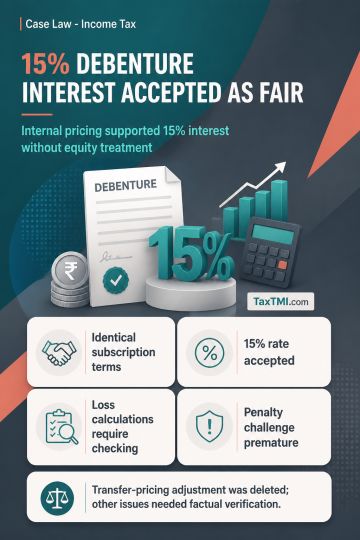
Internal comparable pricing supports arm's-length interest on compulsorily convertible debentures, preventing their recharacterisation as equity for t...
Nominee director protection shields independent financial-institution appointees from criminal liability where they lack involvement in deposit defaul...
Cargo originating from SEZ and lying at gateway ports because of disruption in maritime routes may be handled through a simplified procedure under Section 143AA of the Customs Act, 1962. On the exporter's request, the originating SEZ may cancel the LEO or shipping bill, after which Customs at the gateway port may permit movement of the cargo out of the port for return to the exporter or for re-routing, without requiring the containers to be brought back to the SEZ. The cargo may also be de-stuffed and stored in a Customs bonded warehouse, and any re-routing must comply with filing requirements and other applicable legal procedures. Electronic communication is permitted and the facility remains in force until 30.04.2026.
Cargo originating from SEZ and lying at gateway ports because of disruption in maritime routes may be handled through a simplified procedure under Section 143AA of the Customs Act, 1962. On the exporter's request, the originating SEZ may cancel the LEO or shipping bill, after which Customs at the gateway port may permit movement of the cargo out of the port for return to the exporter or for re-routing, without requiring the containers to be brought back to the SEZ. The cargo may also be de-stuffed and stored in a Customs bonded warehouse, and any re-routing must comply with filing requirements and other applicable legal procedures. Electronic communication is permitted and the facility remains in force until 30.04.2026.
Note: It is a system-generated summary and is for quick reference only.
 TaxTMI
  TaxTMI
 of 4886