Mandatory textile export qualifiers distinguish flame-retardant fabrics from other listed fabrics for automated identification under the textiles ince...
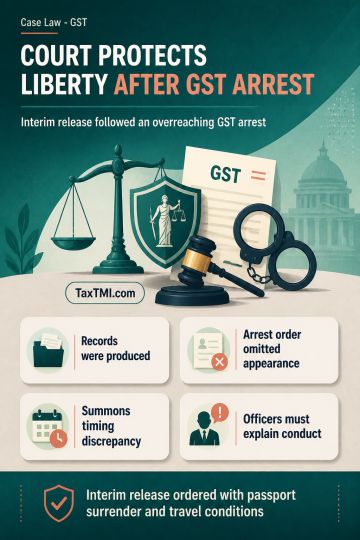
Personal liberty safeguards restrict arrest after court-directed GST appearance, requiring interim release where authorities overreach pending proceed...
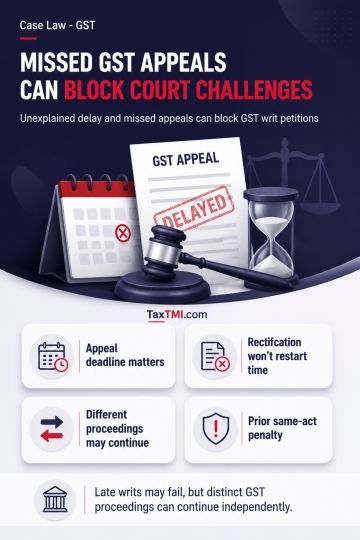
Alternative statutory remedy and delay bar GST writ challenges despite pending rectification, while distinct subject matter permits parallel proceedin...
Page of 4884
Press 'Enter' after typing page number.
261 to 280 of 97661 Results
❮
❯
❯❯
0 / 200
Expand Note
Add to Folder
No Folders have been created
+
Are you sure you want to delete "My most important" ?
Cargo originating from SEZ and lying at gateway ports because of disruption in maritime routes may be handled through a simplified procedure under Section 143AA of the Customs Act, 1962. On the exporter's request, the originating SEZ may cancel the LEO or shipping bill, after which Customs at the gateway port may permit movement of the cargo out of the port for return to the exporter or for re-routing, without requiring the containers to be brought back to the SEZ. The cargo may also be de-stuffed and stored in a Customs bonded warehouse, and any re-routing must comply with filing requirements and other applicable legal procedures. Electronic communication is permitted and the facility remains in force until 30.04.2026.
Cargo originating from SEZ and lying at gateway ports because of disruption in maritime routes may be handled through a simplified procedure under Section 143AA of the Customs Act, 1962. On the exporter's request, the originating SEZ may cancel the LEO or shipping bill, after which Customs at the gateway port may permit movement of the cargo out of the port for return to the exporter or for re-routing, without requiring the containers to be brought back to the SEZ. The cargo may also be de-stuffed and stored in a Customs bonded warehouse, and any re-routing must comply with filing requirements and other applicable legal procedures. Electronic communication is permitted and the facility remains in force until 30.04.2026.
Note: It is a system-generated summary and is for quick reference only.
 TaxTMI
  TaxTMI
 of 4884