Customs Assessment Portal centralises classification and valuation guidance to support consistent, transparent and informed compliance across stakehol...
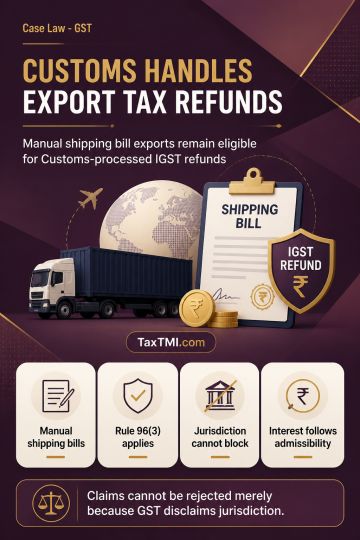
GST refunds for cancelled air tickets remain available when passenger reimbursements defeat unjust enrichment and credit-note adjustment is unavailabl...
Limitation under the I&B Code is a strict statutory regime, and a party cannot extend the appellate period by first pursuing writ proceedings instead of the prescribed appeal. The Tribunal held that where the writ petitions were filed after expiry of the original limitation period and were later not entertained due to availability of an effective alternative remedy, the time spent there could not be excluded to revive an otherwise time-barred appeal. Applying the principle that a special statute prevails over the general law, it treated the request to condone delay as beyond jurisdiction and dismissed the appeals as barred by limitation.
Limitation under the I&B Code is a strict statutory regime, and a party cannot extend the appellate period by first pursuing writ proceedings instead of the prescribed appeal. The Tribunal held that where the writ petitions were filed after expiry of the original limitation period and were later not entertained due to availability of an effective alternative remedy, the time spent there could not be excluded to revive an otherwise time-barred appeal. Applying the principle that a special statute prevails over the general law, it treated the request to condone delay as beyond jurisdiction and dismissed the appeals as barred by limitation.
Note: It is a system-generated summary and is for quick reference only.
 TaxTMI
  TaxTMI
 of 4916