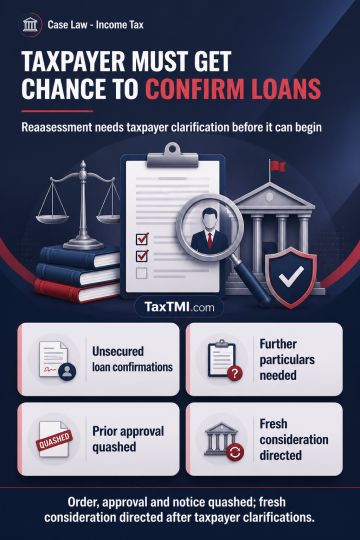
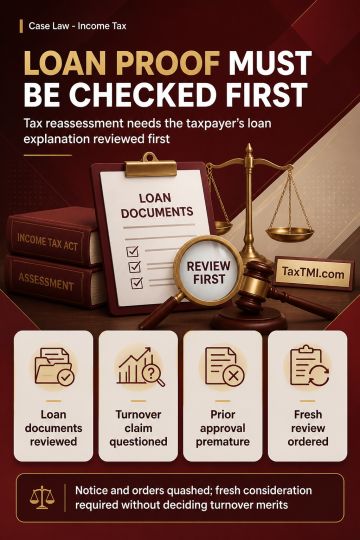
Opportunity to furnish unsecured-loan confirmations is required before reassessment initiation; proceedings require fresh consideration after taxpayer...
A challenge to statutory summons under Section 131(1A) failed because mala fides were not proved by clear evidence, and the petitioner's reliance on later-produced material did not displace the prior TEP basis or the respondents' denial. The High Court also held that an Income Tax Officer authorised under the statutory scheme was competent to issue the summons, so no jurisdictional infirmity or colourable exercise of power was shown. It further accepted that, at the summons stage, the investigating authority was not required to disclose the detailed reasons, source of information, or scope of the ongoing inquiry, since confidentiality of an active tax investigation could be maintained without invalidating the summons.
A challenge to statutory summons under Section 131(1A) failed because mala fides were not proved by clear evidence, and the petitioner's reliance on later-produced material did not displace the prior TEP basis or the respondents' denial. The High Court also held that an Income Tax Officer authorised under the statutory scheme was competent to issue the summons, so no jurisdictional infirmity or colourable exercise of power was shown. It further accepted that, at the summons stage, the investigating authority was not required to disclose the detailed reasons, source of information, or scope of the ongoing inquiry, since confidentiality of an active tax investigation could be maintained without invalidating the summons.
Note: It is a system-generated summary and is for quick reference only.
 TaxTMI
  TaxTMI
 of 4921