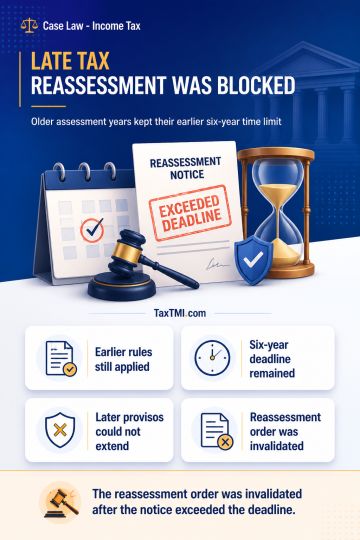
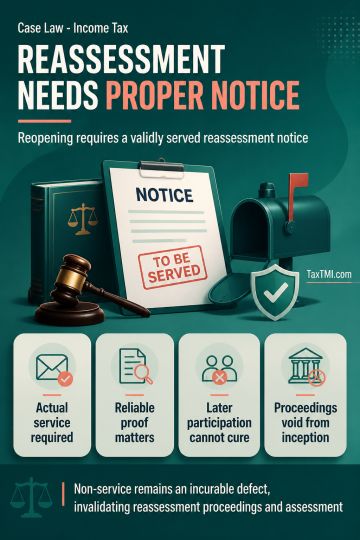
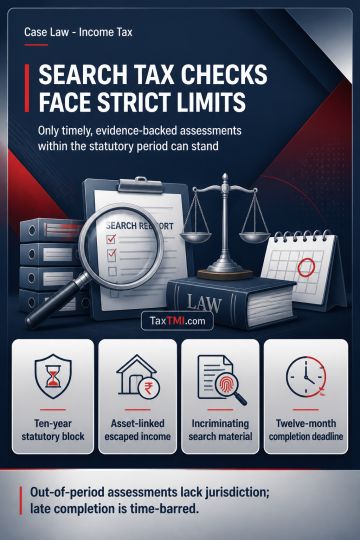
Pre-amendment reassessment limitation bars late notices under the preserved regime, invalidating consequential reassessment for affected earlier asses...
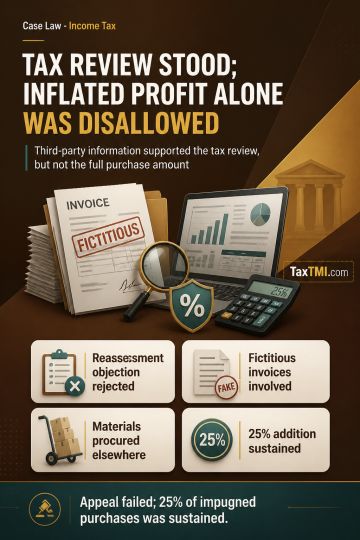
Cash-sales explanations for bank deposits require documentary reconciliation; reassessment notice survived where effective response time was available...
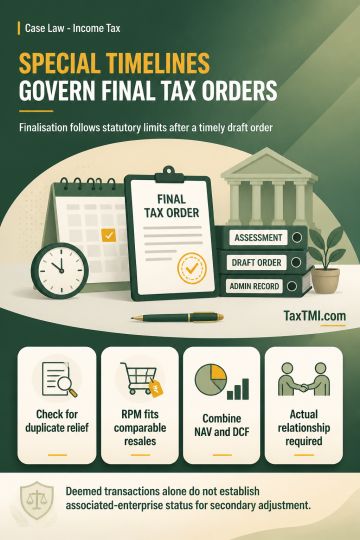
Functional comparability in transfer pricing prevents ad hoc arm's length adjustments where functions, assets, risks and reliable comparables are unes...
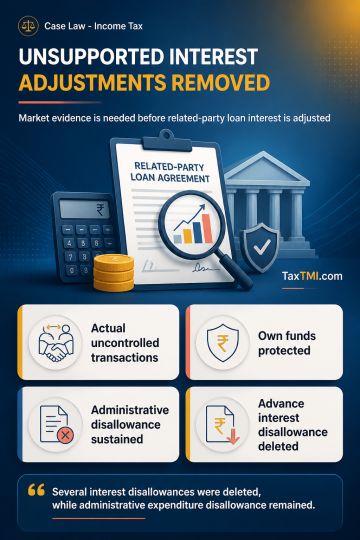
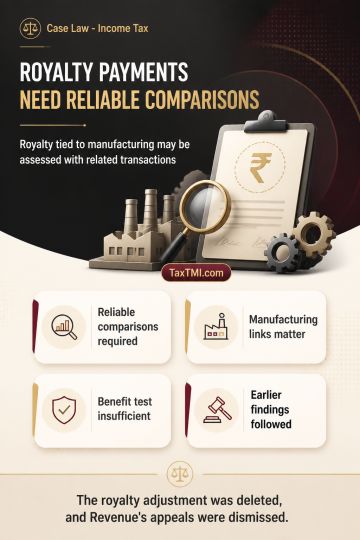
Contingency expenses, exempt-income disallowance, and royalty benchmarking: unsupported adjustments were deleted under consistent accounting and trans...
Page of 4920
Press 'Enter' after typing page number.
61 to 80 of 98394 Results
❮
❯
❯❯
0 / 200
Expand Note
Add to Folder
No Folders have been created
+
Are you sure you want to delete "My most important" ?
The article addresses challenge to tax additions treating...
Genuineness of investment evidence determines LTCG entitlement; non specific regulatory reports cannot displace transaction specific documentary proof.
Contents
Summary
Note
Bookmark
Share
✓ Copied successfully !
Print
Print Options
For full text, please login
Login to TaxTMI
Verification Pending
The Email Id has not been verified. Click on the link we have sent on
The article addresses challenge to tax additions treating claimed long term capital gains as non genuine and invoking unexplained cash credit and alleged commission additions; it explains that where the assessee produced DEMAT records, bank statements, cheques, share certificates and broker notes and had paid MAT, the authorities erred in rejecting LTCG claim on a generalized SEBI modus operandi suspicion because cited SEBI orders did not pertain to the assessee's transactions; the piece concludes that evidentiary burden requires transaction specific adverse findings and that similar findings apply to the subsequent assessment year, leading to allowance of the appeals.
The article addresses challenge to tax additions treating claimed long term capital gains as non genuine and invoking unexplained cash credit and alleged commission additions; it explains that where the assessee produced DEMAT records, bank statements, cheques, share certificates and broker notes and had paid MAT, the authorities erred in rejecting LTCG claim on a generalized SEBI modus operandi suspicion because cited SEBI orders did not pertain to the assessee's transactions; the piece concludes that evidentiary burden requires transaction specific adverse findings and that similar findings apply to the subsequent assessment year, leading to allowance of the appeals.
Note: It is a system-generated summary and is for quick reference only.
 TaxTMI
 TaxTMI

 of 4920