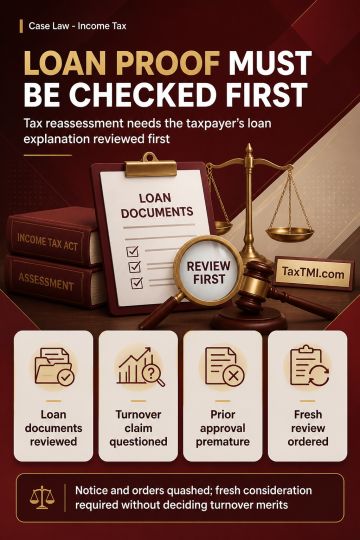
Opportunity to furnish unsecured-loan confirmations is required before reassessment initiation; proceedings require fresh consideration after taxpayer...
Reopening under ss. 148A(3)/148 was challenged on the ground that the alleged escapement based on stamp duty valuation mismatch and payment routing to a confirming party could not trigger s. 56(2)(x) where the land was held as stock-in-trade. The Court held that s. 56(2)(x) applies only on receipt of a capital asset, whereas the assessee consistently disclosed the land as stock-in-trade in its books. It further held that the AO had already examined stamp duty vis-Ã -vis consideration, ledger entries, agreements, and confirmations from the landowners and the confirming party in the regular assessment, and the payment explanations were not an afterthought. Continuation of reassessment was held to be an abuse of statutory power; the impugned order and notice were quashed. - HC
Reopening under ss. 148A(3)/148 was challenged on the ground that the alleged escapement based on stamp duty valuation mismatch and payment routing to a confirming party could not trigger s. 56(2)(x) where the land was held as stock-in-trade. The Court held that s. 56(2)(x) applies only on receipt of a capital asset, whereas the assessee consistently disclosed the land as stock-in-trade in its books. It further held that the AO had already examined stamp duty vis-Ã -vis consideration, ledger entries, agreements, and confirmations from the landowners and the confirming party in the regular assessment, and the payment explanations were not an afterthought. Continuation of reassessment was held to be an abuse of statutory power; the impugned order and notice were quashed. - HC
Note: It is a system-generated summary and is for quick reference only.
 TaxTMI
  TaxTMI