Political contribution deductions require genuine transactions; banking records and party registration alone cannot defeat evidence of accommodation e...
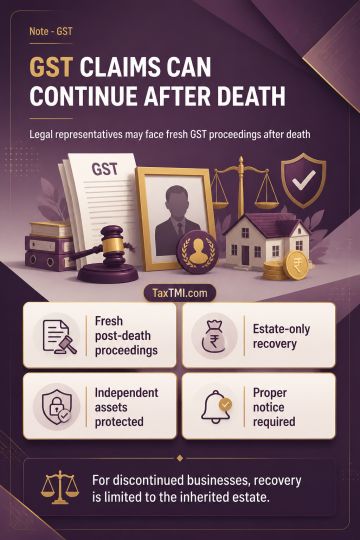
Post-death GST liability permits fresh proceedings against legal representatives, while discontinued-business recovery remains limited to the inherite...
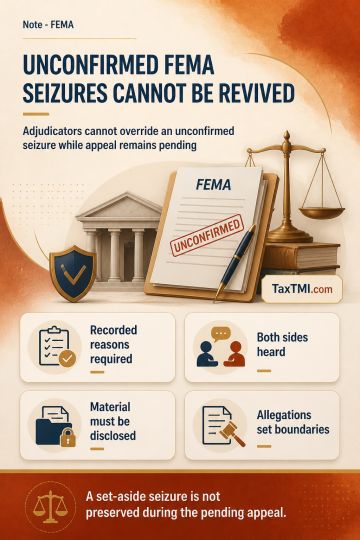
Non-confirmation of FEMA seizure prevents adjudicators from overriding pending appellate findings on recorded reasons and suspected foreign asset hold...
The amendment to the Securities and Exchange Board of India (Foreign Venture Capital Investors) Regulations, 2000 introduces the concept of "Single Window Automatic and Generalised Access for Trusted Foreign Investor" (SWAGAT-FI), aligning its definition with the Foreign Portfolio Investors Regulations, 2019. It exempts SWAGAT-FIs from certain eligibility conditions under regulation 3(2) and from the prescribed 66.67% and 33.33% investment limits under regulation 11(c). It restructures renewal fee obligations for SWAGAT-FIs, requiring payment in advance for every ten-year block starting from the eleventh year of registration, as reflected in regulation 9(2) and the Second Schedule. The amendment comes into force 180 days after publication.
The amendment to the Securities and Exchange Board of India (Foreign Venture Capital Investors) Regulations, 2000 introduces the concept of "Single Window Automatic and Generalised Access for Trusted Foreign Investor" (SWAGAT-FI), aligning its definition with the Foreign Portfolio Investors Regulations, 2019. It exempts SWAGAT-FIs from certain eligibility conditions under regulation 3(2) and from the prescribed 66.67% and 33.33% investment limits under regulation 11(c). It restructures renewal fee obligations for SWAGAT-FIs, requiring payment in advance for every ten-year block starting from the eleventh year of registration, as reflected in regulation 9(2) and the Second Schedule. The amendment comes into force 180 days after publication.
Note: It is a system-generated summary and is for quick reference only.
 TaxTMI
  TaxTMI