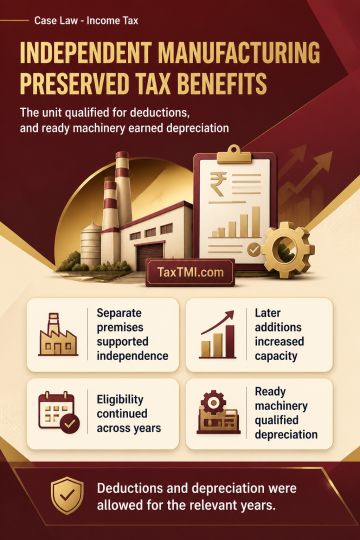
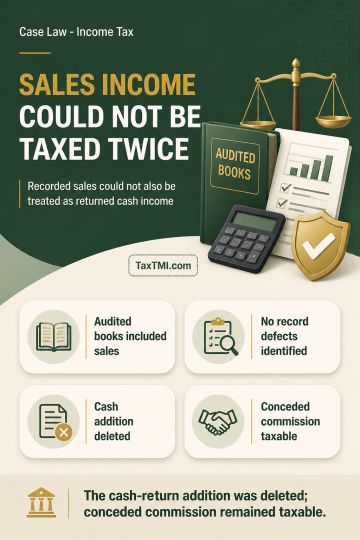
Independent manufacturing undertaking eligibility preserves Section 80IA/80IB deductions, while machinery kept ready for use qualifies for depreciatio...
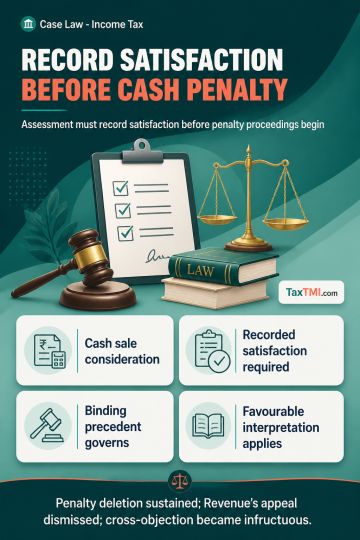
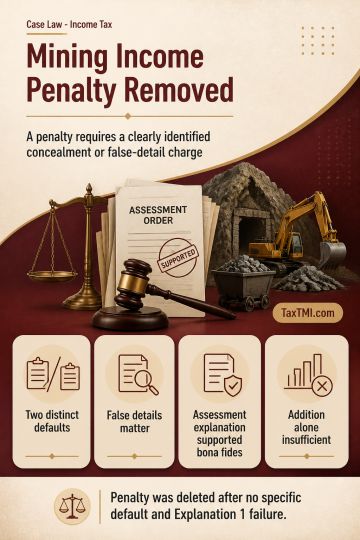
Assessing Officer Satisfaction Requirement Bars Penalty for Cash Receipt in Immovable-Property Sale Cases Where Initiation Lacks Recorded Satisfaction...
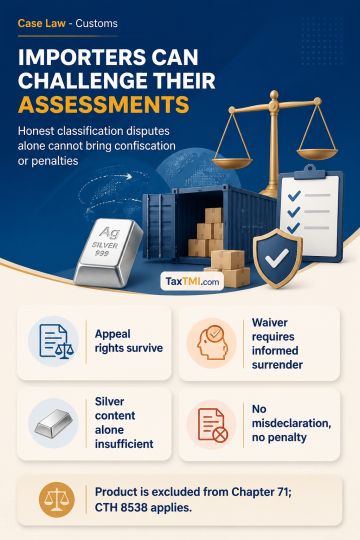
Self-assessed import entries remain appealable, while bona fide classification disputes without misdeclaration cannot justify confiscation or penaltie...
Actual-user customs exemption conditions permit turnkey project transfers when imported windmill components are exclusively used for installation and ...
Customs offence disqualification excludes civil contraventions, preventing refusal of a private bonded warehouse licence based solely on monetary pena...
CESTAT allowed the appeals filed by various anonymous tile manufacturers and associated noticees, setting aside the entire demand of central excise duty, interest and penalties arising from alleged clandestine manufacture and removal of ceramic/vitrified tiles and sanitaryware. The Tribunal held that the Dept. failed to discharge its burden of proof, as the case rested almost entirely on uncorroborated third-party statements, scribbled bank entries and assumptions, without seizure of offending goods, excess stock, corroborative transport documents, or evidence of excess raw material, power consumption or labour. CESTAT also noted non-compliance with s. 9D of the Central Excise Act, 1944, since key statements were neither properly examined in chief nor subjected to cross-examination. Finding the investigation slipshod and the evidentiary standard of preponderance of probability unmet, CESTAT ruled that the allegation of clandestine removal was unsustainable, rendering all consequential demands and penalties invalid.
CESTAT allowed the appeals filed by various anonymous tile manufacturers and associated noticees, setting aside the entire demand of central excise duty, interest and penalties arising from alleged clandestine manufacture and removal of ceramic/vitrified tiles and sanitaryware. The Tribunal held that the Dept. failed to discharge its burden of proof, as the case rested almost entirely on uncorroborated third-party statements, scribbled bank entries and assumptions, without seizure of offending goods, excess stock, corroborative transport documents, or evidence of excess raw material, power consumption or labour. CESTAT also noted non-compliance with s. 9D of the Central Excise Act, 1944, since key statements were neither properly examined in chief nor subjected to cross-examination. Finding the investigation slipshod and the evidentiary standard of preponderance of probability unmet, CESTAT ruled that the allegation of clandestine removal was unsustainable, rendering all consequential demands and penalties invalid.
Note: It is a system-generated summary and is for quick reference only.
 TaxTMI
  TaxTMI
 of 4897