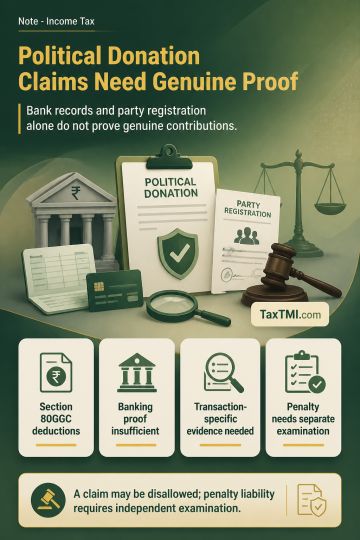
Political contribution deductions require genuine transactions; banking records and party registration alone cannot defeat evidence of accommodation e...
Post-death GST liability permits fresh proceedings against legal representatives, while discontinued-business recovery remains limited to the inherite...
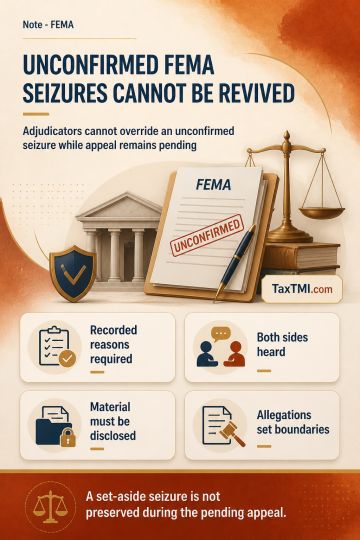
Non-confirmation of FEMA seizure prevents adjudicators from overriding pending appellate findings on recorded reasons and suspected foreign asset hold...
CESTAT held that the revenue could not treat the importer's written "acceptance" of enhanced assessable value as unconditional, since contemporaneous letters clearly showed clearance was sought on payment of duty under protest, including a request for provisional assessment. As all bills of entry were post-2011, the Proper Officer was statutorily obliged under s.17(5) of the Customs Act to issue a speaking order recording reasons for rejection of the declared transaction value and basis of enhancement, which was not done. CESTAT ruled that the statutory right to challenge the Proper Officer's decision cannot be waived merely by acceptance letters, particularly when contemporaneous import data was neither disclosed nor discussed. Consequently, the impugned Orders-in-Appeal were set aside and the appeals of M/s X allowed, with directions to re-determine assessable value strictly in accordance with s.17(5) and principles of natural justice.
CESTAT held that the revenue could not treat the importer's written "acceptance" of enhanced assessable value as unconditional, since contemporaneous letters clearly showed clearance was sought on payment of duty under protest, including a request for provisional assessment. As all bills of entry were post-2011, the Proper Officer was statutorily obliged under s.17(5) of the Customs Act to issue a speaking order recording reasons for rejection of the declared transaction value and basis of enhancement, which was not done. CESTAT ruled that the statutory right to challenge the Proper Officer's decision cannot be waived merely by acceptance letters, particularly when contemporaneous import data was neither disclosed nor discussed. Consequently, the impugned Orders-in-Appeal were set aside and the appeals of M/s X allowed, with directions to re-determine assessable value strictly in accordance with s.17(5) and principles of natural justice.
Note: It is a system-generated summary and is for quick reference only.
 TaxTMI
  TaxTMI