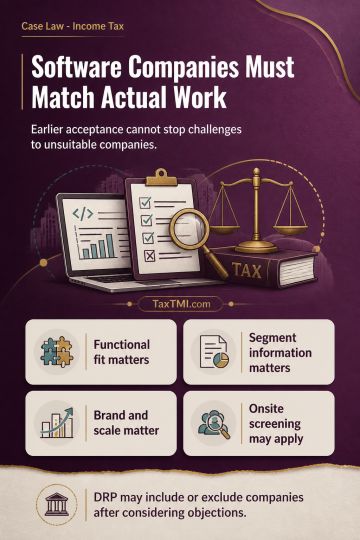
Transfer-pricing comparability permits fresh objections and filters where software service comparables are functionally unsuitable for arm's-length pr...
Territorial rendering requirement excludes China-based management and consultancy services from fees for technical services under the India-China DTAA...
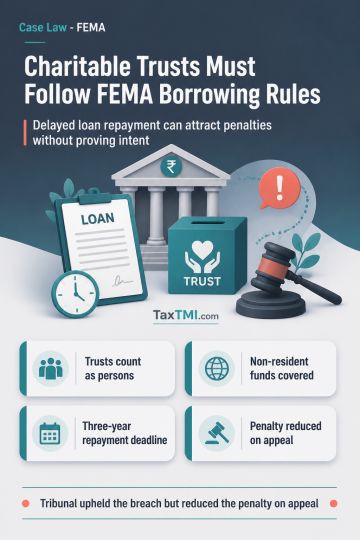
FEMA borrowing restrictions bind charitable trusts, and civil penalties apply without proving intent for delayed repayment of non-resident rupee loans...
SC held that key provisions of the Tribunal Reforms Act, 2021, including those on minimum age, curtailed tenure, upper age caps, panel selection process, and equivalence of service conditions with civil servants, are unconstitutional. The Court found that Parliament had impermissibly reenacted, in altered form, provisions previously struck down, without curing the constitutional defects, amounting to a legislative override of binding judicial directions. Such measures were held violative of constitutional supremacy, separation of powers, judicial independence, and Article 14. SC clarified that while Parliament may enact curative legislation, it cannot disregard or nullify prior judicial pronouncements. The offending provisions were struck down, with protection extended to affected tribunal members whose appointments had been delayed and improperly subjected to the new regime. Petitions were disposed of.
SC held that key provisions of the Tribunal Reforms Act, 2021, including those on minimum age, curtailed tenure, upper age caps, panel selection process, and equivalence of service conditions with civil servants, are unconstitutional. The Court found that Parliament had impermissibly reenacted, in altered form, provisions previously struck down, without curing the constitutional defects, amounting to a legislative override of binding judicial directions. Such measures were held violative of constitutional supremacy, separation of powers, judicial independence, and Article 14. SC clarified that while Parliament may enact curative legislation, it cannot disregard or nullify prior judicial pronouncements. The offending provisions were struck down, with protection extended to affected tribunal members whose appointments had been delayed and improperly subjected to the new regime. Petitions were disposed of.
Note: It is a system-generated summary and is for quick reference only.
 TaxTMI
  TaxTMI
 of 4891