Political contribution deductions require genuine transactions; banking records and party registration alone cannot defeat evidence of accommodation e...
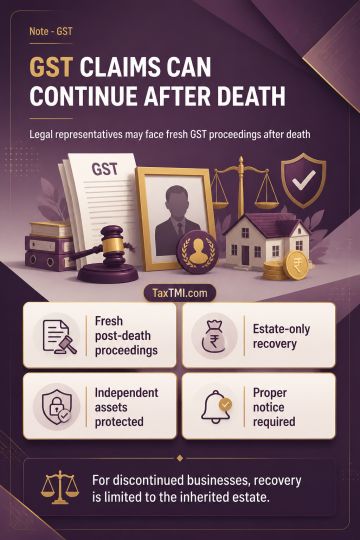
Post-death GST liability permits fresh proceedings against legal representatives, while discontinued-business recovery remains limited to the inherite...
Non-confirmation of FEMA seizure prevents adjudicators from overriding pending appellate findings on recorded reasons and suspected foreign asset hold...
ITAT upheld the addition made under the head "Income from other sources" in respect of interest received under s.28 of the Land Acquisition Act, treating it as taxable u/s 56(2)(viii) read with s.145B(1) for the post-01.04.2010 assessment year in question. The agricultural land compensation itself remained exempt u/s 10(37), but the interest component was held separately chargeable on receipt basis. ITAT ruled that earlier Supreme Court jurisprudence characterising such interest as part of compensation applied only to the pre-amendment regime and cannot override the explicit charging provisions inserted by the Finance Act, 2010. Arguments based on Hari Singh, Braham Prakash and the per incuriam doctrine were rejected, and the High Court decisions upholding post-amendment taxability were followed. The assessee's appeal was dismissed.
ITAT upheld the addition made under the head "Income from other sources" in respect of interest received under s.28 of the Land Acquisition Act, treating it as taxable u/s 56(2)(viii) read with s.145B(1) for the post-01.04.2010 assessment year in question. The agricultural land compensation itself remained exempt u/s 10(37), but the interest component was held separately chargeable on receipt basis. ITAT ruled that earlier Supreme Court jurisprudence characterising such interest as part of compensation applied only to the pre-amendment regime and cannot override the explicit charging provisions inserted by the Finance Act, 2010. Arguments based on Hari Singh, Braham Prakash and the per incuriam doctrine were rejected, and the High Court decisions upholding post-amendment taxability were followed. The assessee's appeal was dismissed.
Note: It is a system-generated summary and is for quick reference only.
 TaxTMI
  TaxTMI