Political contribution deductions require genuine transactions; banking records and party registration alone cannot defeat evidence of accommodation e...
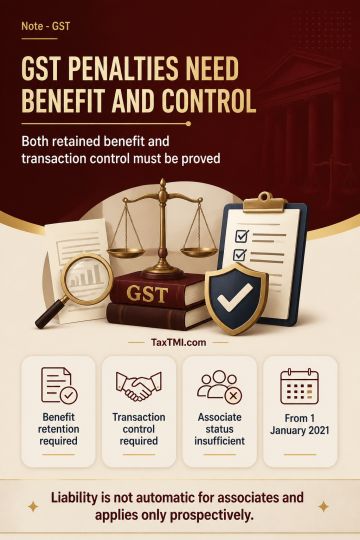
Post-death GST liability permits fresh proceedings against legal representatives, while discontinued-business recovery remains limited to the inherite...
Non-confirmation of FEMA seizure prevents adjudicators from overriding pending appellate findings on recorded reasons and suspected foreign asset hold...
The CESTAT set aside the cancellation of the Public Bonded Warehouse License under Section 58(B) of the Customs Act, 1962, imposed due to alleged shortages detected during stock verification. The Tribunal noted that customs duty amounting to Rs. 17.14 lakhs was deposited prior to the verification, which the Department failed to consider, and found discrepancies in the reported shortage quantity. There was no evidence of collusion between the appellant and a third party for clandestine removal of goods. Given the appellant was not a habitual offender and had already been penalized with the maximum fine of Rs. 4 lakhs under Section 117, the Tribunal held that cancellation of the license was disproportionate and would unjustly deprive the appellant of livelihood. Consequently, the penalty was upheld, but the license cancellation was quashed, allowing the appeal.
The CESTAT set aside the cancellation of the Public Bonded Warehouse License under Section 58(B) of the Customs Act, 1962, imposed due to alleged shortages detected during stock verification. The Tribunal noted that customs duty amounting to Rs. 17.14 lakhs was deposited prior to the verification, which the Department failed to consider, and found discrepancies in the reported shortage quantity. There was no evidence of collusion between the appellant and a third party for clandestine removal of goods. Given the appellant was not a habitual offender and had already been penalized with the maximum fine of Rs. 4 lakhs under Section 117, the Tribunal held that cancellation of the license was disproportionate and would unjustly deprive the appellant of livelihood. Consequently, the penalty was upheld, but the license cancellation was quashed, allowing the appeal.
Note: It is a system-generated summary and is for quick reference only.
 TaxTMI
 TaxTMI