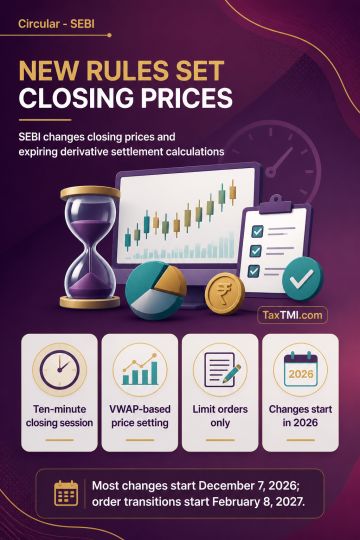
Form 26AS evidence requires successor-entity accounting verification after business transfer, while invoice-supported related-party advertising expend...
Money-laundering judgment timing requires awaiting the scheduled-offence decision despite continuation of the underlying trial where outcomes directly...
Accredited investor eligibility expands through securities-market exposure, while alternative investment fund disputes require prescribed resolution a...
ITAT allowed the assessee's appeal challenging tax computation. The CPC's adjustment of tax rate from 25% to 30% was deemed unjustified, primarily because the adjustment was made on a debatable issue regarding gross turnover calculation without providing the assessee an opportunity to be heard, which violated the first proviso to section 143(1). The tribunal found that the issues surrounding service tax input credit, interest income, and recovery of bad debts constituted a complex interpretative matter that could not be summarily resolved through a unilateral adjustment. Consequently, the computational order was set aside, restoring the original tax assessment at 25%.
ITAT allowed the assessee's appeal challenging tax computation. The CPC's adjustment of tax rate from 25% to 30% was deemed unjustified, primarily because the adjustment was made on a debatable issue regarding gross turnover calculation without providing the assessee an opportunity to be heard, which violated the first proviso to section 143(1). The tribunal found that the issues surrounding service tax input credit, interest income, and recovery of bad debts constituted a complex interpretative matter that could not be summarily resolved through a unilateral adjustment. Consequently, the computational order was set aside, restoring the original tax assessment at 25%.
Note: It is a system-generated summary and is for quick reference only.
 TaxTMI
 TaxTMI

 of 4915