Political contribution deductions require genuine transactions; banking records and party registration alone cannot defeat evidence of accommodation e...
Post-death GST liability permits fresh proceedings against legal representatives, while discontinued-business recovery remains limited to the inherite...
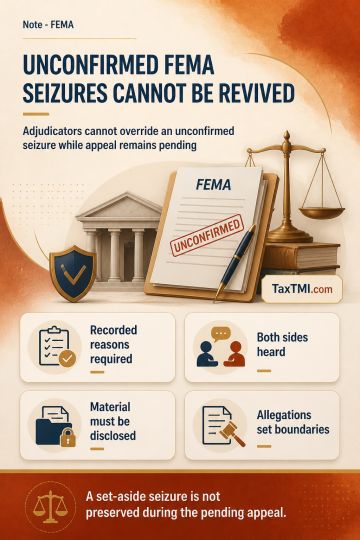
Non-confirmation of FEMA seizure prevents adjudicators from overriding pending appellate findings on recorded reasons and suspected foreign asset hold...
ITAT upheld the CIT(A)'s order deleting penalty u/s 271(1)(c) against the assessee. The tribunal found the depreciation claim was a clerical error without malafide intention to evade taxes. The error was rectified in subsequent assessment year and did not impact tax liability. Relying on Supreme Court precedent, the tribunal concluded that a non-sustainable claim does not automatically constitute furnishing inaccurate income particulars. Consequently, the penalty was deleted, affirming the lower appellate authority's reasoning that the assessee's action did not warrant punitive measures.
ITAT upheld the CIT(A)'s order deleting penalty u/s 271(1)(c) against the assessee. The tribunal found the depreciation claim was a clerical error without malafide intention to evade taxes. The error was rectified in subsequent assessment year and did not impact tax liability. Relying on Supreme Court precedent, the tribunal concluded that a non-sustainable claim does not automatically constitute furnishing inaccurate income particulars. Consequently, the penalty was deleted, affirming the lower appellate authority's reasoning that the assessee's action did not warrant punitive measures.
Note: It is a system-generated summary and is for quick reference only.
 TaxTMI
  TaxTMI