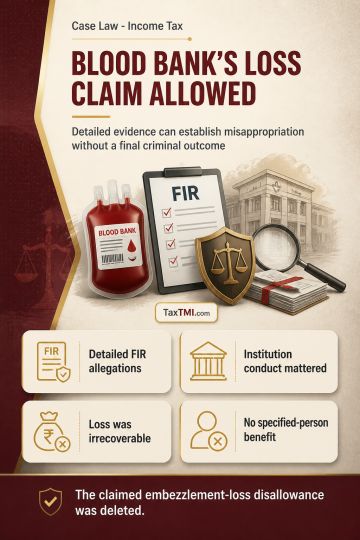
Embezzlement losses in charitable institutions remain allowable when misappropriation is established, irrecoverable, and not a specified-person benefi...
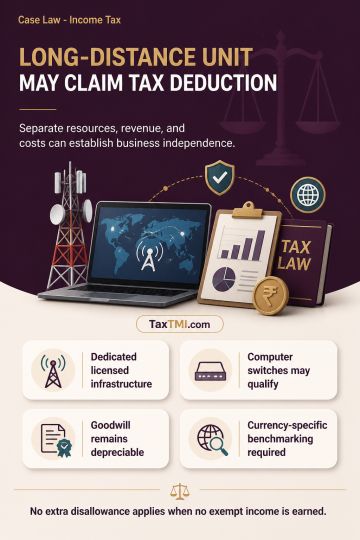
National long-distance undertaking status supports deduction where separately licensed infrastructure, resources, revenue, and expenditure establish c...
Agency reimbursement income follows contractual deposit-liability computation, while pending deposit collections do not constitute deemed-dividend loa...
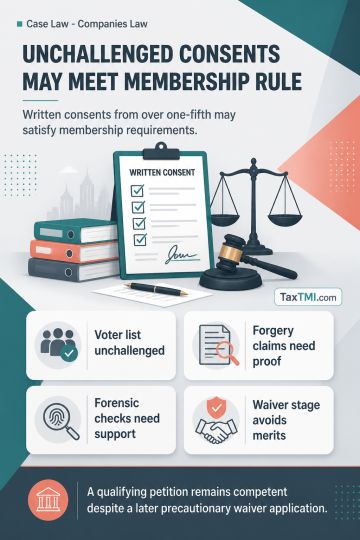
Membership-consent thresholds for oppression petitions are satisfied by unchallenged voter-list consents, while unsupported forgery claims require pro...
HC determined that mere non-completion of part-B of e-way bill does not automatically warrant penalty under Section 129 of U.P. G.S.T. Act, 2017. The court found no evidence of tax evasion attempt by the petitioner. Without a specific finding regarding intentional tax evasion, the penalty levy was deemed unsustainable. Consistent with prior judicial precedents, the court emphasized that procedural non-compliance alone cannot justify punitive action. The impugned order was consequently set aside, and the petition was allowed, effectively quashing the penalty imposed by the tax authorities.
HC determined that mere non-completion of part-B of e-way bill does not automatically warrant penalty under Section 129 of U.P. G.S.T. Act, 2017. The court found no evidence of tax evasion attempt by the petitioner. Without a specific finding regarding intentional tax evasion, the penalty levy was deemed unsustainable. Consistent with prior judicial precedents, the court emphasized that procedural non-compliance alone cannot justify punitive action. The impugned order was consequently set aside, and the petition was allowed, effectively quashing the penalty imposed by the tax authorities.
Note: It is a system-generated summary and is for quick reference only.
 TaxTMI
  TaxTMI
 of 4883