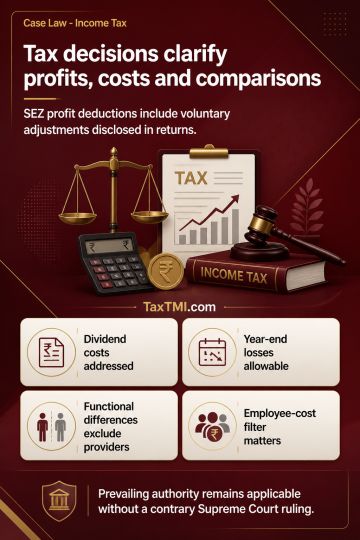
SEZ-unit profit deduction covers voluntary transfer-pricing adjustments, while exempt-income costs, foreign-exchange loss and ITeS comparables are exa...
Page of 4884
Press 'Enter' after typing page number.
221 to 240 of 97661 Results
❮
❯
❯❯
0 / 200
Expand Note
Add to Folder
No Folders have been created
+
Are you sure you want to delete "My most important" ?
NCLAT dismissed the appeal, finding the delay of 2659 days in filing the appeal was unjustifiable and beyond the statutorily prescribed 90-day limitation period. The tribunal held that the appellant failed to demonstrate sufficient cause for the extensive delay, noting a lack of diligence in tracking proceedings and missing critical procedural timelines. The application for condonation of delay was rejected, emphasizing the appellant's responsibility to maintain procedural punctuality and timely pursue legal remedies within the prescribed statutory framework.
NCLAT dismissed the appeal, finding the delay of 2659 days in filing the appeal was unjustifiable and beyond the statutorily prescribed 90-day limitation period. The tribunal held that the appellant failed to demonstrate sufficient cause for the extensive delay, noting a lack of diligence in tracking proceedings and missing critical procedural timelines. The application for condonation of delay was rejected, emphasizing the appellant's responsibility to maintain procedural punctuality and timely pursue legal remedies within the prescribed statutory framework.
Note: It is a system-generated summary and is for quick reference only.
 TaxTMI
  TaxTMI
 of 4884