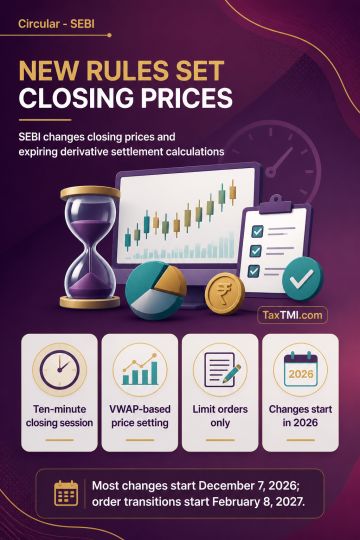
Form 26AS evidence requires successor-entity accounting verification after business transfer, while invoice-supported related-party advertising expend...
Money-laundering judgment timing requires awaiting the scheduled-offence decision despite continuation of the underlying trial where outcomes directly...
Accredited investor eligibility expands through securities-market exposure, while alternative investment fund disputes require prescribed resolution a...
HC held that the period of limitation under Section 153B for assessment orders cannot be automatically excluded when exchange of information occurs. The exclusion is contingent upon a formal reference made strictly in accordance with the Indo-Swiss Double Taxation Avoidance Agreement (DTAA). In this instance, the revenue's request did not comply with Article 14 of the Amending Protocol. Consequently, the court ruled against the revenue, determining that the time taken for obtaining information cannot be unilaterally excluded from the limitation period. The assessment orders were thus challenged, with the legal questions being answered in favor of the assessees and against the revenue's interpretation of procedural limitations.
HC held that the period of limitation under Section 153B for assessment orders cannot be automatically excluded when exchange of information occurs. The exclusion is contingent upon a formal reference made strictly in accordance with the Indo-Swiss Double Taxation Avoidance Agreement (DTAA). In this instance, the revenue's request did not comply with Article 14 of the Amending Protocol. Consequently, the court ruled against the revenue, determining that the time taken for obtaining information cannot be unilaterally excluded from the limitation period. The assessment orders were thus challenged, with the legal questions being answered in favor of the assessees and against the revenue's interpretation of procedural limitations.
Note: It is a system-generated summary and is for quick reference only.
 TaxTMI
 TaxTMI

 of 4915