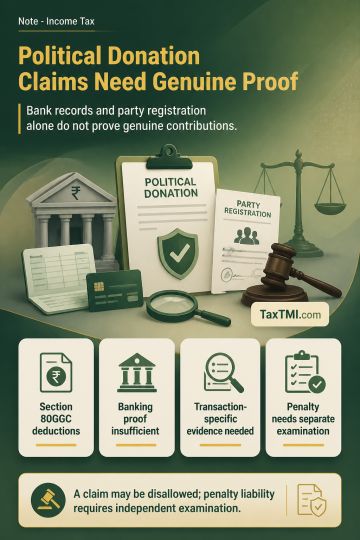
Political contribution deductions require genuine transactions; banking records and party registration alone cannot defeat evidence of accommodation e...
Post-death GST liability permits fresh proceedings against legal representatives, while discontinued-business recovery remains limited to the inherite...
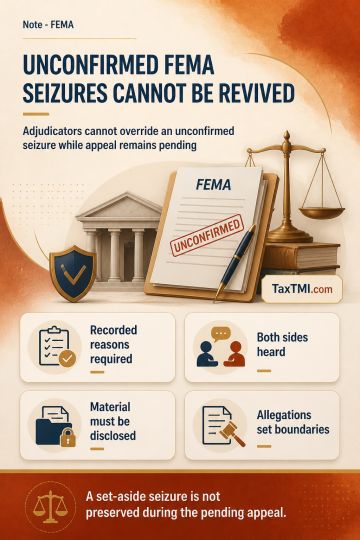
Non-confirmation of FEMA seizure prevents adjudicators from overriding pending appellate findings on recorded reasons and suspected foreign asset hold...
CESTAT adjudicated a case involving alleged gold smuggling, finding insufficient evidence to substantiate charges against the appellant. The tribunal determined that the primary witness statement was not voluntary and no corroborative evidence existed to implicate the appellant in the smuggling offense. Consequently, the tribunal set aside the penalty of Rs.10,00,000/- imposed under Sections 112(a) and 112(b) of the Customs Act, 1962, observing that without reliable proof of the appellant's involvement in the alleged smuggling, punitive action was unwarranted. The tribunal relied on precedential reasoning from a similar case, ultimately allowing the appellant's appeal and nullifying the previously imposed penalty.
CESTAT adjudicated a case involving alleged gold smuggling, finding insufficient evidence to substantiate charges against the appellant. The tribunal determined that the primary witness statement was not voluntary and no corroborative evidence existed to implicate the appellant in the smuggling offense. Consequently, the tribunal set aside the penalty of Rs.10,00,000/- imposed under Sections 112(a) and 112(b) of the Customs Act, 1962, observing that without reliable proof of the appellant's involvement in the alleged smuggling, punitive action was unwarranted. The tribunal relied on precedential reasoning from a similar case, ultimately allowing the appellant's appeal and nullifying the previously imposed penalty.
Note: It is a system-generated summary and is for quick reference only.
 TaxTMI
  TaxTMI