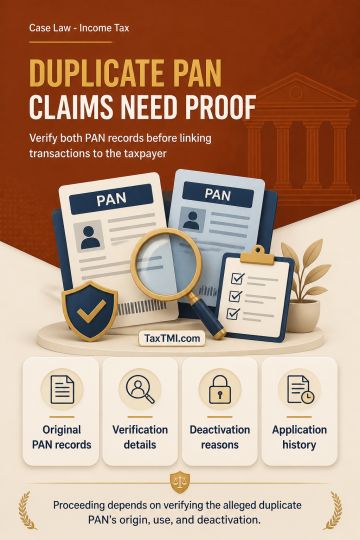
Duplicate PAN allocation requires record verification and deactivation reasons before assessment-related transactions can be attributed to an assessee...
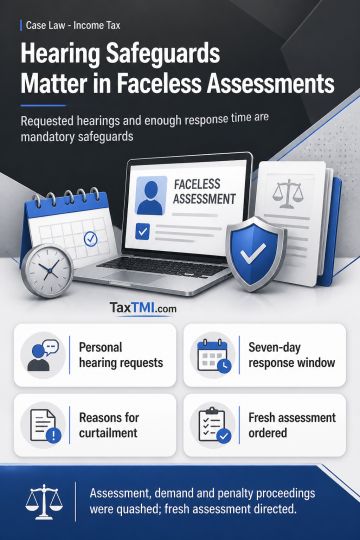
Faceless assessment safeguards require requested personal hearings and adequate final show-cause response time, failing which reassessment is required...
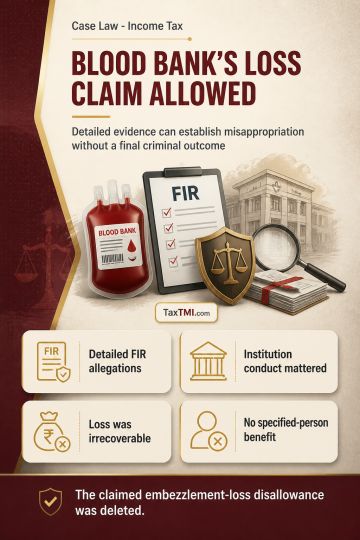
Embezzlement losses in charitable institutions remain allowable when misappropriation is established, irrecoverable, and not a specified-person benefi...
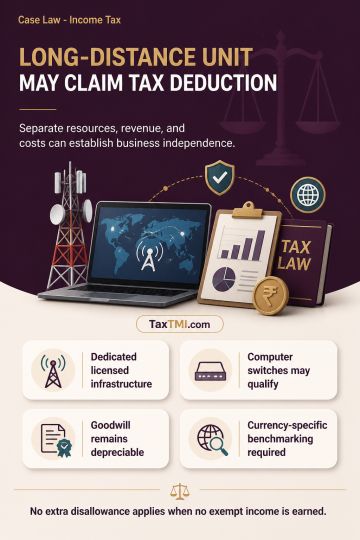
National long-distance undertaking status supports deduction where separately licensed infrastructure, resources, revenue, and expenditure establish c...
Agency reimbursement income follows contractual deposit-liability computation, while pending deposit collections do not constitute deemed-dividend loa...
The HC allowed the petition, quashing the impugned order blocking the petitioner's Electronic Credit Ledger (ECL) under Rule 86A of CGST Rules. The court found the order legally unsustainable due to absence of pre-decisional hearing and lack of independent, cogent reasons for blocking the ECL. The respondents' reliance on borrowed satisfaction from enforcement authorities was deemed impermissible. The order's failure to provide substantive reasons for blocking the ECL, coupled with procedural irregularities, necessitated its quashing, thereby restoring the petitioner's access to the electronic credit ledger.
The HC allowed the petition, quashing the impugned order blocking the petitioner's Electronic Credit Ledger (ECL) under Rule 86A of CGST Rules. The court found the order legally unsustainable due to absence of pre-decisional hearing and lack of independent, cogent reasons for blocking the ECL. The respondents' reliance on borrowed satisfaction from enforcement authorities was deemed impermissible. The order's failure to provide substantive reasons for blocking the ECL, coupled with procedural irregularities, necessitated its quashing, thereby restoring the petitioner's access to the electronic credit ledger.
Note: It is a system-generated summary and is for quick reference only.
 TaxTMI
  TaxTMI
 of 4884