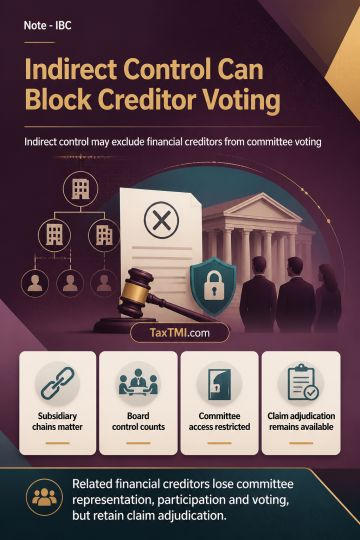
Indirect corporate control can create related-party status, excluding financial creditors from Committee of Creditors representation, participation an...
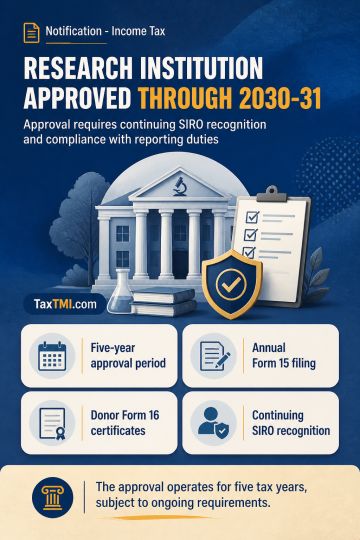
Scientific research association approval requires continuing SIRO status, annual donation reporting, and donor certificates for the approved foundatio...
Scientific research institution approval is conditional on SIRO recognition, annual donation reporting, donor certification, and prescribed compliance...
ITAT adjudicated a taxation dispute concerning penalty levy under section 270A. The tribunal examined whether disallowed expenses constituted underreported income. Key findings indicate that adjustments made under section 143(1)(a) involving apparent computational mistakes do not qualify as underreported income warranting penalty. The tribunal distinguished between inadvertent computational errors and deliberate income misreporting. Specifically, additions made during assessment that stem from apparent mistakes are exempt from penalty provisions. The tribunal interpreted section 270A(2)(a) narrowly, holding that only income determined through scrutiny assessment can be classified as underreported. Consequently, the tribunal ruled in favor of the assessee, negating penalty imposition and emphasizing legislative intent to exclude inadvertent computational errors from punitive taxation measures.
ITAT adjudicated a taxation dispute concerning penalty levy under section 270A. The tribunal examined whether disallowed expenses constituted underreported income. Key findings indicate that adjustments made under section 143(1)(a) involving apparent computational mistakes do not qualify as underreported income warranting penalty. The tribunal distinguished between inadvertent computational errors and deliberate income misreporting. Specifically, additions made during assessment that stem from apparent mistakes are exempt from penalty provisions. The tribunal interpreted section 270A(2)(a) narrowly, holding that only income determined through scrutiny assessment can be classified as underreported. Consequently, the tribunal ruled in favor of the assessee, negating penalty imposition and emphasizing legislative intent to exclude inadvertent computational errors from punitive taxation measures.
Note: It is a system-generated summary and is for quick reference only.
 TaxTMI
  TaxTMI