Capital-gains exemption for charitable trusts extends to qualifying fixed deposits, while unrecoverable TDS write-offs may constitute income applicati...
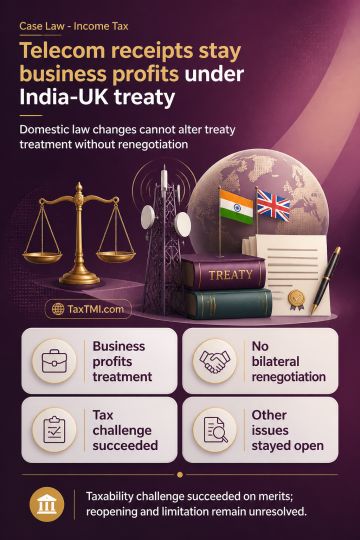
India-UK treaty characterisation of telecom-service receipts as business profits withstands unilateral domestic-law amendments for Indian tax purposes...
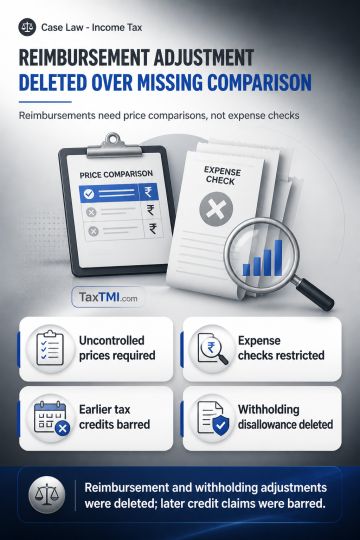
Transfer-pricing reimbursement adjustments require uncontrolled comparables and cannot become expense-genuineness reviews, resulting in deletion of th...
The AAR ruled that no GST is payable on goods (gas) lost during transit as no supply occurred, since the loss happened before delivery to the customer and prior to the place and time of supply being established. However, the applicant must reverse Input Tax Credit (ITC) on inputs used in manufacturing the goods subsequently lost in transit. The authority determined that such inputs fail the "proper end use" condition under Section 16(1) of CGST Act, as they were not ultimately used in furtherance of business through a taxable outward supply. The ITC reversal is required under Section 17(5)(h) read with Section 16, as the goods were lost/destroyed during transit.
The AAR ruled that no GST is payable on goods (gas) lost during transit as no supply occurred, since the loss happened before delivery to the customer and prior to the place and time of supply being established. However, the applicant must reverse Input Tax Credit (ITC) on inputs used in manufacturing the goods subsequently lost in transit. The authority determined that such inputs fail the "proper end use" condition under Section 16(1) of CGST Act, as they were not ultimately used in furtherance of business through a taxable outward supply. The ITC reversal is required under Section 17(5)(h) read with Section 16, as the goods were lost/destroyed during transit.
Note: It is a system-generated summary and is for quick reference only.
 TaxTMI
  TaxTMI
 of 4888