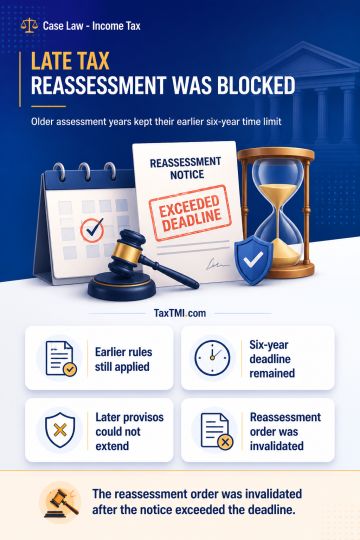
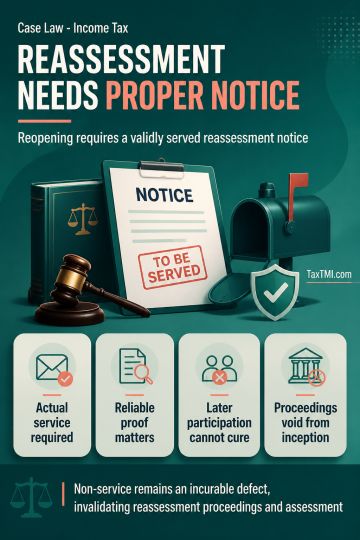
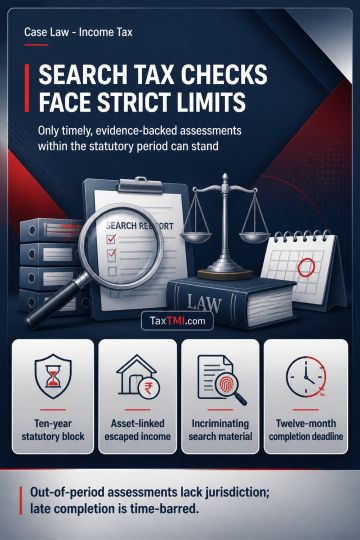
Pre-amendment reassessment limitation bars late notices under the preserved regime, invalidating consequential reassessment for affected earlier asses...
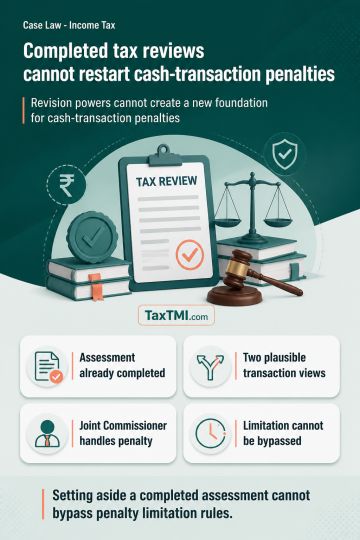
Cash-sales explanations for bank deposits require documentary reconciliation; reassessment notice survived where effective response time was available...
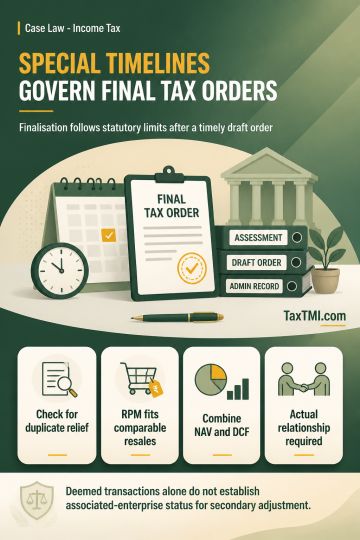
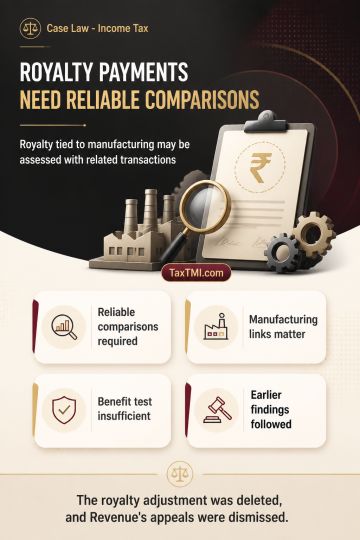
Functional comparability in transfer pricing prevents ad hoc arm's length adjustments where functions, assets, risks and reliable comparables are unes...
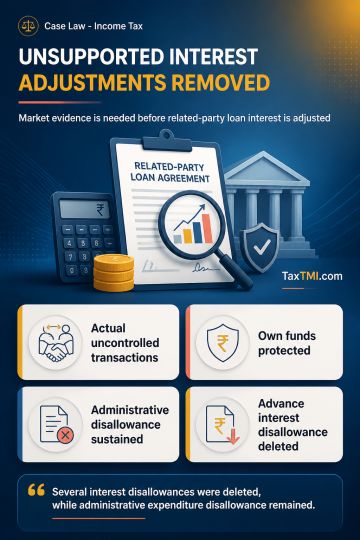
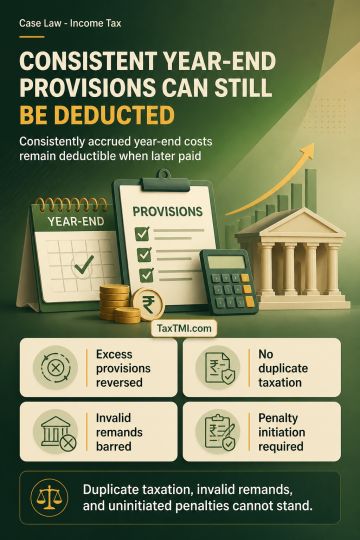
Contingency expenses, exempt-income disallowance, and royalty benchmarking: unsupported adjustments were deleted under consistent accounting and trans...
The AAAR held that a registered person must reverse Input Tax Credit (ITC) availed on inputs used to manufacture steel nails that were subsequently destroyed in a fire accident. While Section 16 of SGST Act, 2017 generally allows ITC on inputs used in furtherance of business, Section 17(5) specifically prohibits ITC on goods that are "lost, stolen, destroyed or written off." The AAAR emphasized that Section 17(5) contains a non-obstante clause giving it overriding effect over Section 16(1) and Section 18(1). Therefore, despite the appellant's arguments regarding Section 16(1), the AAAR upheld the original Advance Ruling, requiring the appellant to reverse ITC on inputs used in manufacturing the destroyed finished goods.
The AAAR held that a registered person must reverse Input Tax Credit (ITC) availed on inputs used to manufacture steel nails that were subsequently destroyed in a fire accident. While Section 16 of SGST Act, 2017 generally allows ITC on inputs used in furtherance of business, Section 17(5) specifically prohibits ITC on goods that are "lost, stolen, destroyed or written off." The AAAR emphasized that Section 17(5) contains a non-obstante clause giving it overriding effect over Section 16(1) and Section 18(1). Therefore, despite the appellant's arguments regarding Section 16(1), the AAAR upheld the original Advance Ruling, requiring the appellant to reverse ITC on inputs used in manufacturing the destroyed finished goods.
Note: It is a system-generated summary and is for quick reference only.
 TaxTMI
  TaxTMI
 of 4918