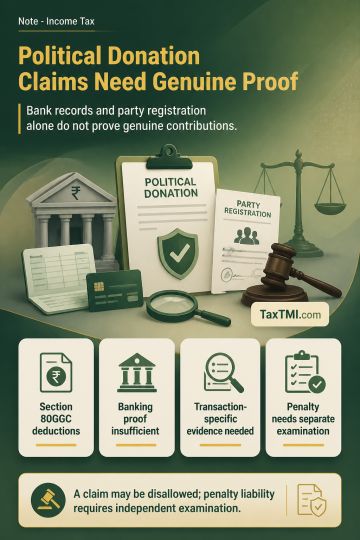
Political contribution deductions require genuine transactions; banking records and party registration alone cannot defeat evidence of accommodation e...
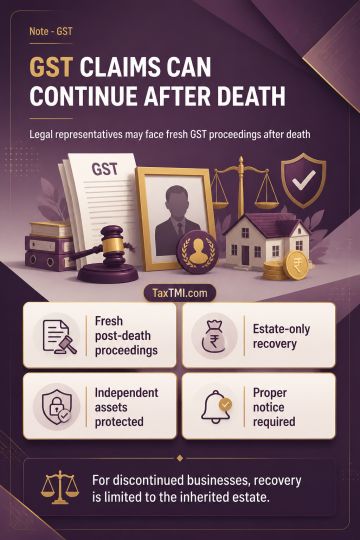
Post-death GST liability permits fresh proceedings against legal representatives, while discontinued-business recovery remains limited to the inherite...
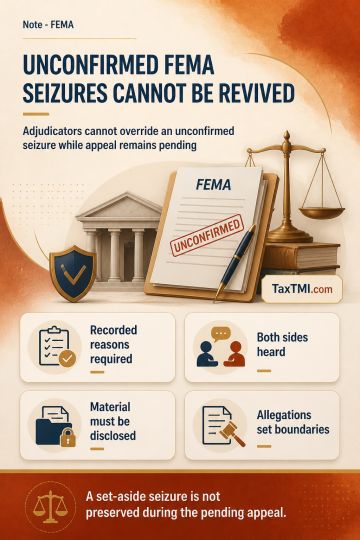
Non-confirmation of FEMA seizure prevents adjudicators from overriding pending appellate findings on recorded reasons and suspected foreign asset hold...
CESTAT ruled on short payment of excise duty involving related parties under Section 4(3)(b) of Central Excise Act. Company directors (siblings) held 99% shares and made clearances to distributor firm owned by their parents, establishing related party relationship. Differential pricing pattern revealed mutual interest, with distributor receiving goods at lower prices. Tribunal held transaction value must be based on distributor's selling price per Rule 9 of CEVR 2000. Interest payment required on differential duty, though penalty was not imposed as department filed no cross-objection. Established principle prevents appellant from being placed in worse position upon appeal. Appeal rejected, affirming duty valuation and interest payment requirements.
CESTAT ruled on short payment of excise duty involving related parties under Section 4(3)(b) of Central Excise Act. Company directors (siblings) held 99% shares and made clearances to distributor firm owned by their parents, establishing related party relationship. Differential pricing pattern revealed mutual interest, with distributor receiving goods at lower prices. Tribunal held transaction value must be based on distributor's selling price per Rule 9 of CEVR 2000. Interest payment required on differential duty, though penalty was not imposed as department filed no cross-objection. Established principle prevents appellant from being placed in worse position upon appeal. Appeal rejected, affirming duty valuation and interest payment requirements.
Note: It is a system-generated summary and is for quick reference only.
 TaxTMI
  TaxTMI