Political contribution deductions require genuine transactions; banking records and party registration alone cannot defeat evidence of accommodation e...
Post-death GST liability permits fresh proceedings against legal representatives, while discontinued-business recovery remains limited to the inherite...
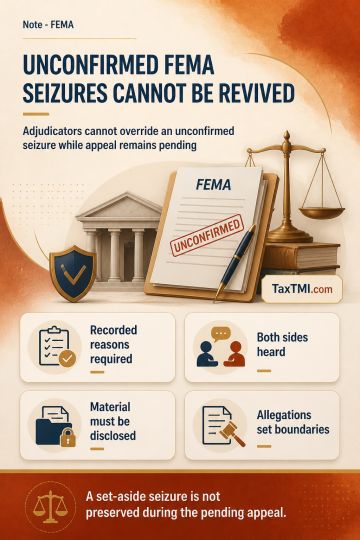
Non-confirmation of FEMA seizure prevents adjudicators from overriding pending appellate findings on recorded reasons and suspected foreign asset hold...
HC upheld validity of Section 132 of Companies Act 2013 and NFRA Rules while addressing disciplinary proceedings against audit firms and partners. Court rejected challenges based on vicarious liability, finding that firms and partners share unified responsibility under Companies Act framework. Retroactive application challenge was dismissed as Section 132 merely modified enforcement mechanism without creating new liabilities. However, proceedings were invalidated due to procedural defects in NFRA's structure where same Executive Body both issued findings and initiated disciplinary action, violating principles of natural justice and creating reasonable likelihood of bias. Court emphasized need for separate divisions within NFRA to maintain procedural fairness and avoid predetermination in disciplinary matters.
HC upheld validity of Section 132 of Companies Act 2013 and NFRA Rules while addressing disciplinary proceedings against audit firms and partners. Court rejected challenges based on vicarious liability, finding that firms and partners share unified responsibility under Companies Act framework. Retroactive application challenge was dismissed as Section 132 merely modified enforcement mechanism without creating new liabilities. However, proceedings were invalidated due to procedural defects in NFRA's structure where same Executive Body both issued findings and initiated disciplinary action, violating principles of natural justice and creating reasonable likelihood of bias. Court emphasized need for separate divisions within NFRA to maintain procedural fairness and avoid predetermination in disciplinary matters.
Note: It is a system-generated summary and is for quick reference only.
 TaxTMI
  TaxTMI