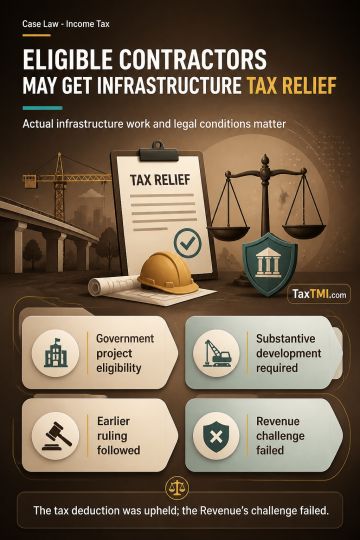
Infrastructure-development deduction remains available to EPC contractors when substantive statutory conditions outweigh contractor labels in agreemen...
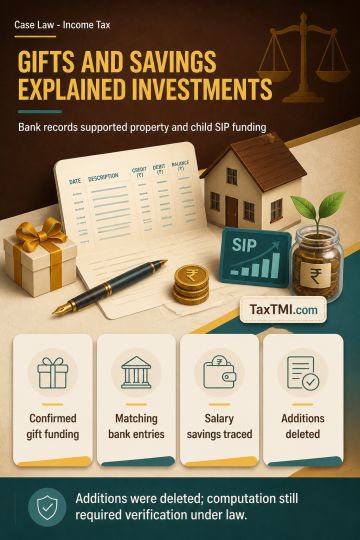
Explained Investment Sources: documented gifts and traceable salary savings supported deletion of additions for property and mutual-fund SIP investmen...
Internal comparable pricing supports arm's-length interest on compulsorily convertible debentures, preventing their recharacterisation as equity for t...
Nominee director protection shields independent financial-institution appointees from criminal liability where they lack involvement in deposit defaul...
Page of 4884
Press 'Enter' after typing page number.
241 to 260 of 97661 Results
❮
❯
❯❯
0 / 200
Expand Note
Add to Folder
No Folders have been created
+
Are you sure you want to delete "My most important" ?
HC held that appellate authority lacks inherent power to condone delay beyond statutory limits under CGST Act Section 107. Appeals must be filed within three months of order communication, with discretionary one-month extension for sufficient cause under Section 107(4). Where legislation creates special limitation regime with terminal date, general provisions of Limitation Act do not apply. Appellate authority's condonation power is strictly confined to statutory framework. Appeals filed beyond combined four-month period (three months plus one month extension) under Section 107(1) and 107(4) were dismissed as time-barred. Court emphasized that statutory remedies must strictly adhere to prescribed limitation periods in special tax legislation.
HC held that appellate authority lacks inherent power to condone delay beyond statutory limits under CGST Act Section 107. Appeals must be filed within three months of order communication, with discretionary one-month extension for sufficient cause under Section 107(4). Where legislation creates special limitation regime with terminal date, general provisions of Limitation Act do not apply. Appellate authority's condonation power is strictly confined to statutory framework. Appeals filed beyond combined four-month period (three months plus one month extension) under Section 107(1) and 107(4) were dismissed as time-barred. Court emphasized that statutory remedies must strictly adhere to prescribed limitation periods in special tax legislation.
Note: It is a system-generated summary and is for quick reference only.
 TaxTMI
  TaxTMI
 of 4884