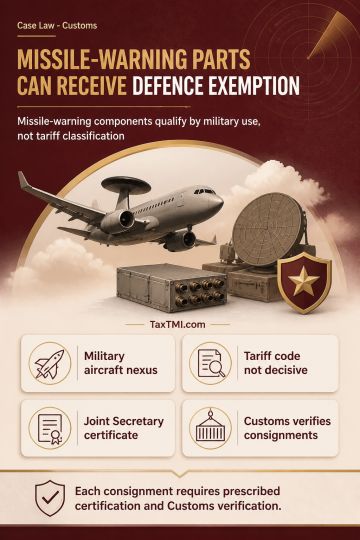
Customs-controlled cargo movement now includes GDL, subject to EXIM prioritisation, segregation, verification, reconciliation and enforcement safeguar...
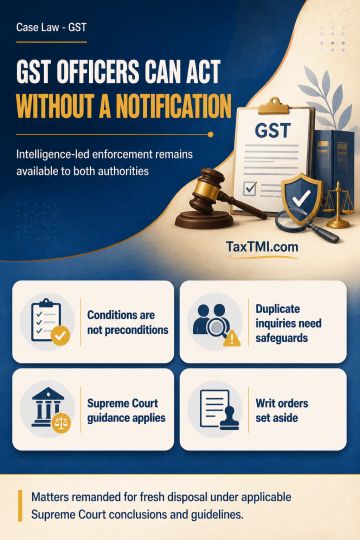
GST cross-empowerment remains effective without conditional notification, while duplicate proceedings require established safeguards against overlappi...
HC held that appellate authority lacks inherent power to condone delay beyond statutory limits under CGST Act Section 107. Appeals must be filed within three months of order communication, with discretionary one-month extension for sufficient cause under Section 107(4). Where legislation creates special limitation regime with terminal date, general provisions of Limitation Act do not apply. Appellate authority's condonation power is strictly confined to statutory framework. Appeals filed beyond combined four-month period (three months plus one month extension) under Section 107(1) and 107(4) were dismissed as time-barred. Court emphasized that statutory remedies must strictly adhere to prescribed limitation periods in special tax legislation.
HC held that appellate authority lacks inherent power to condone delay beyond statutory limits under CGST Act Section 107. Appeals must be filed within three months of order communication, with discretionary one-month extension for sufficient cause under Section 107(4). Where legislation creates special limitation regime with terminal date, general provisions of Limitation Act do not apply. Appellate authority's condonation power is strictly confined to statutory framework. Appeals filed beyond combined four-month period (three months plus one month extension) under Section 107(1) and 107(4) were dismissed as time-barred. Court emphasized that statutory remedies must strictly adhere to prescribed limitation periods in special tax legislation.
Note: It is a system-generated summary and is for quick reference only.
 TaxTMI
  TaxTMI