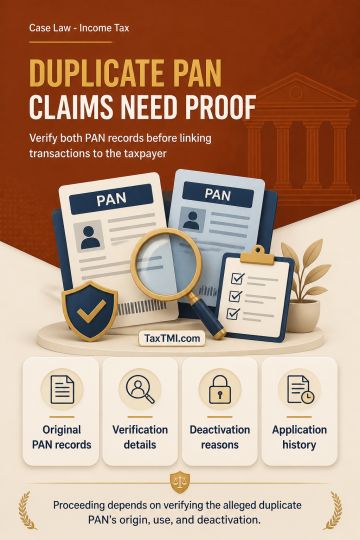
Duplicate PAN allocation requires record verification and deactivation reasons before assessment-related transactions can be attributed to an assessee...
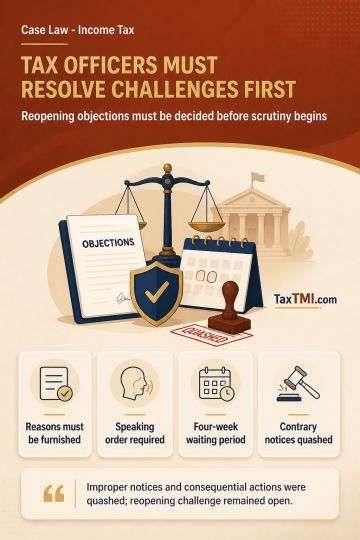
Faceless assessment safeguards require requested personal hearings and adequate final show-cause response time, failing which reassessment is required...
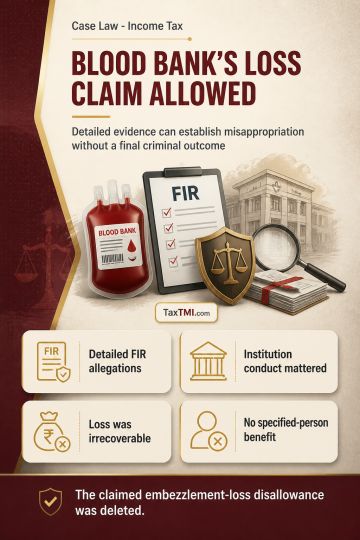
Embezzlement losses in charitable institutions remain allowable when misappropriation is established, irrecoverable, and not a specified-person benefi...
National long-distance undertaking status supports deduction where separately licensed infrastructure, resources, revenue, and expenditure establish c...
Agency reimbursement income follows contractual deposit-liability computation, while pending deposit collections do not constitute deemed-dividend loa...
Page of 4891
Press 'Enter' after typing page number.
201 to 220 of 97809 Results
❮
❯
❯❯
0 / 200
Expand Note
Add to Folder
No Folders have been created
+
Are you sure you want to delete "My most important" ?
HC determined that payments made under CGST Act were coerced, not voluntary self-ascertainment under Section 74(5). Evidence showed statements were recorded and deposits made under duress, with implicit threats of arrest. The timing of payments - one made after summons issuance and another during Bengaluru appearance - indicated coercion. Court rejected appellant's argument that respondent's affidavit challenging statements was belated, noting one-week gap was not fatal. Finding the recovery contrary to law, HC upheld single judge's order directing refund with interest. The cumulative facts demonstrated clear pattern of threat and coercion, invalidating both recorded statements and subsequent payments. Appeal dismissed.
HC determined that payments made under CGST Act were coerced, not voluntary self-ascertainment under Section 74(5). Evidence showed statements were recorded and deposits made under duress, with implicit threats of arrest. The timing of payments - one made after summons issuance and another during Bengaluru appearance - indicated coercion. Court rejected appellant's argument that respondent's affidavit challenging statements was belated, noting one-week gap was not fatal. Finding the recovery contrary to law, HC upheld single judge's order directing refund with interest. The cumulative facts demonstrated clear pattern of threat and coercion, invalidating both recorded statements and subsequent payments. Appeal dismissed.
Note: It is a system-generated summary and is for quick reference only.
 TaxTMI
  TaxTMI
 of 4891