Permanent establishment tests: independent subsidiary premises and principal-to-principal dealings did not create Indian taxability for offshore suppl...
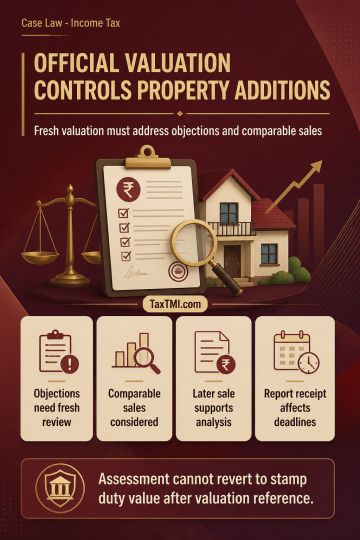
Valuation Officer estimates govern property-value additions once statutory valuation is invoked, requiring fresh consideration of objections and compa...
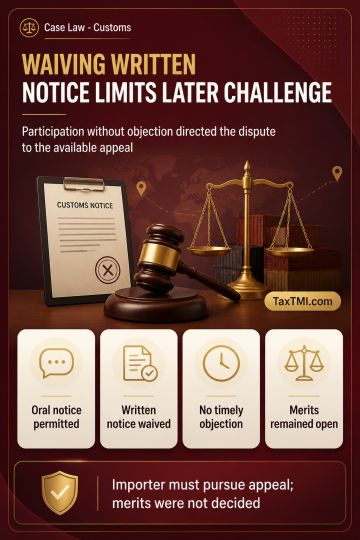
Waiver of written show-cause notice may prevent a later procedural challenge after participation in customs adjudication, preserving statutory appella...
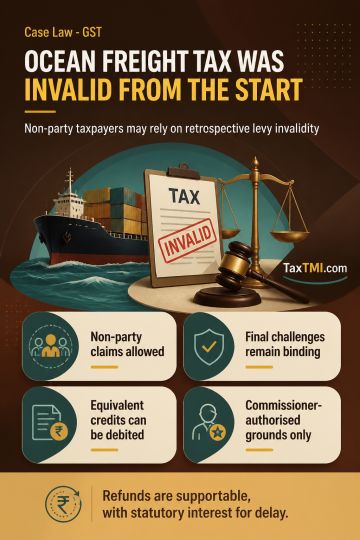
Retrospective invalidity of ocean-freight IGST supports refunds despite non-party status and prior credit utilisation, subject to authorised appeal gr...
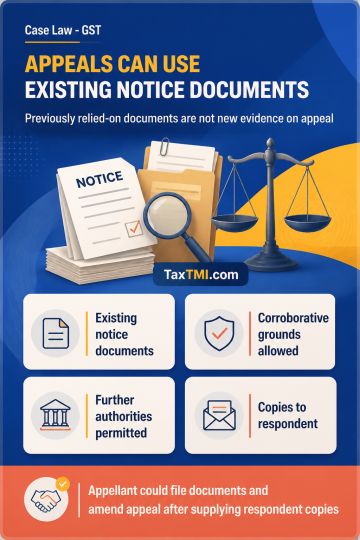
Additional evidence in departmental appeals may include show-cause-notice material without introducing a new case where it merely corroborates existin...
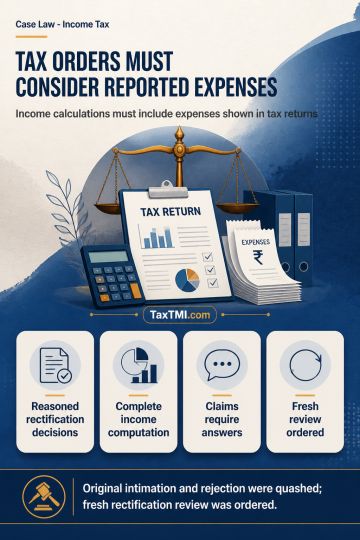
Reasoned rectification orders require consideration of expenditure disclosed in income-tax returns, preventing revision based on incomplete income com...
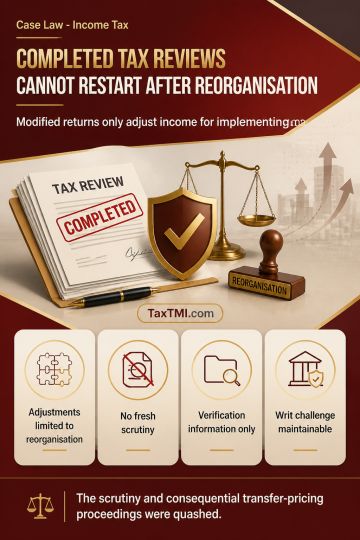
Modified returns after business reorganisations cannot trigger fresh scrutiny once the original assessment was complete, invalidating related transfer...
Page of 4891
Press 'Enter' after typing page number.
21 to 40 of 97820 Results
❮
❯
❯❯
0 / 200
Expand Note
Add to Folder
No Folders have been created
+
Are you sure you want to delete "My most important" ?
The High Court held that statements recorded u/s 132(4) of the Income Tax Act, 1961, are admissible evidence u/s 158BD read with Section 3 of the Indian Evidence Act, 1872, and Section 131. In the present case, the husbands of the assessees made statements during search operations that the total investment in constructing the house property was Rs. 15 lakhs, though only Rs. 7 lakhs was accounted for. The assessees reiterated this fact on 03.05.1999. Such statements are presumed true unless the assessees plead that they were obtained forcibly, by coercion, or undue influence. The burden lies on the assessees to establish that the admission is incorrect or wrong. As the assessees failed to discharge this burden, the Tribunal rightly set aside the order passed by the CIT (Appeals), deciding against the assessees.
The High Court held that statements recorded u/s 132(4) of the Income Tax Act, 1961, are admissible evidence u/s 158BD read with Section 3 of the Indian Evidence Act, 1872, and Section 131. In the present case, the husbands of the assessees made statements during search operations that the total investment in constructing the house property was Rs. 15 lakhs, though only Rs. 7 lakhs was accounted for. The assessees reiterated this fact on 03.05.1999. Such statements are presumed true unless the assessees plead that they were obtained forcibly, by coercion, or undue influence. The burden lies on the assessees to establish that the admission is incorrect or wrong. As the assessees failed to discharge this burden, the Tribunal rightly set aside the order passed by the CIT (Appeals), deciding against the assessees.
Note: It is a system-generated summary and is for quick reference only.
 TaxTMI
  TaxTMI
 of 4891