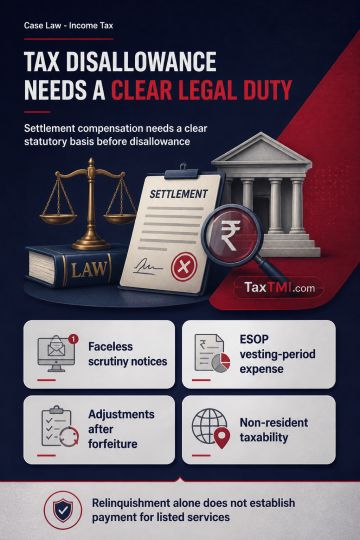
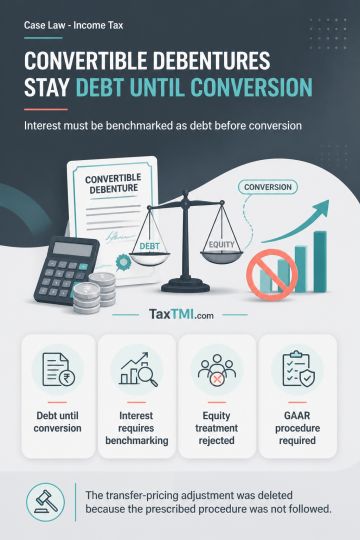
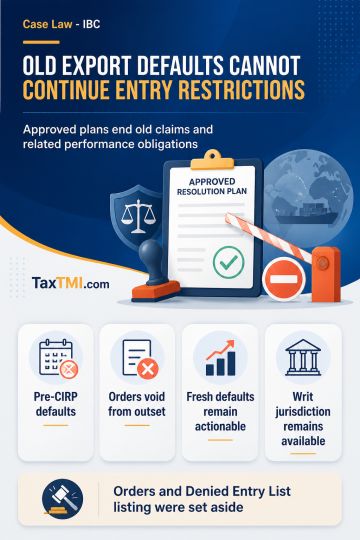
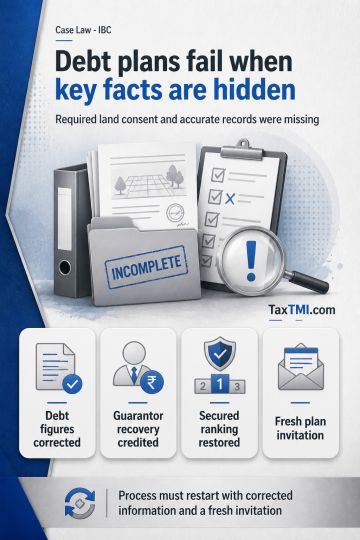
Stock-in-trade transfer taxability follows possession and consideration, not later conveyance registration, limiting deemed-value provisions to the ac...
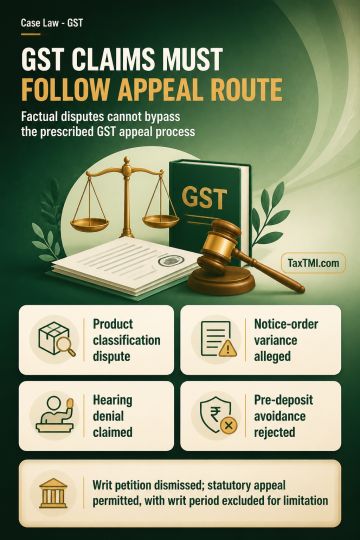
Alternative statutory remedy under GST bars writ challenge where classification, notice variance, and hearing disputes require factual appellate revie...
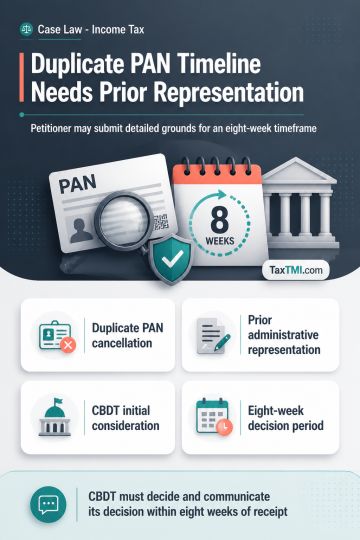
Duplicate PAN cancellation timeframe requires prior administrative representation before judicial intervention, ensuring a time-bound decision on the ...
Regarding the disallowance of late deposit of ESI/PF u/s 36(1)(va), following the Supreme Court's ratio in Checkmate Services, the ITAT allowed the Revenue's ground and upheld the Assessing Officer's addition. Concerning the disallowance on account of sundry creditors, the assessee had written off the credit balances during the subsequent year, and reversing the addition would amount to double taxation; hence, the ITAT dismissed the Revenue's ground. Pertaining to the disallowance of depreciation at 25% on the opening WDV of intellectual property rights, the ITAT held that the merger effectively took place in FY 2013-14, and the assets, including the patented technology's value accepted by the High Court, merged with the assessee company. The Assessing Officer erred by passing the assessment order on a standalone basis despite knowledge of the amalgamation. The tax authorities are bound to consider the assessee's state of affairs as on 01/04/2013, and the return filed reflecting the consolidated balance sheet should have been accepted. The value of the patent technology was accepted by the High Court and the Assessing Officer in the scrutiny proceedings for AY 2014-15. Therefore, the CIT.
Regarding the disallowance of late deposit of ESI/PF u/s 36(1)(va), following the Supreme Court's ratio in Checkmate Services, the ITAT allowed the Revenue's ground and upheld the Assessing Officer's addition. Concerning the disallowance on account of sundry creditors, the assessee had written off the credit balances during the subsequent year, and reversing the addition would amount to double taxation; hence, the ITAT dismissed the Revenue's ground. Pertaining to the disallowance of depreciation at 25% on the opening WDV of intellectual property rights, the ITAT held that the merger effectively took place in FY 2013-14, and the assets, including the patented technology's value accepted by the High Court, merged with the assessee company. The Assessing Officer erred by passing the assessment order on a standalone basis despite knowledge of the amalgamation. The tax authorities are bound to consider the assessee's state of affairs as on 01/04/2013, and the return filed reflecting the consolidated balance sheet should have been accepted. The value of the patent technology was accepted by the High Court and the Assessing Officer in the scrutiny proceedings for AY 2014-15. Therefore, the CIT.
Note: It is a system-generated summary and is for quick reference only.
 TaxTMI
  TaxTMI
 of 4886