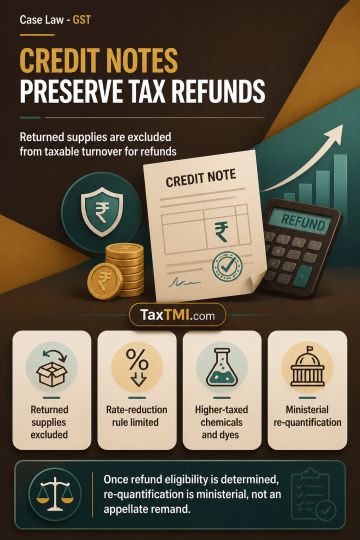
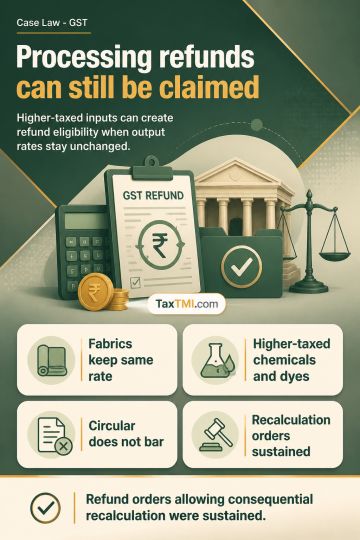
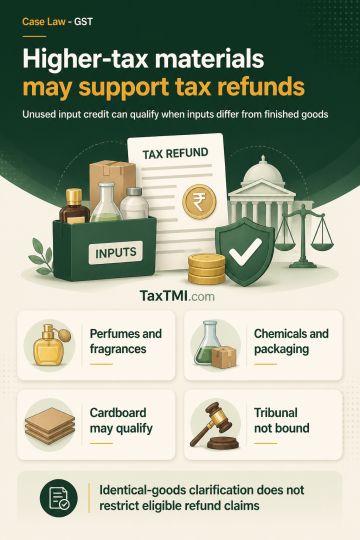
Credit-note turnover adjustments preserve inverted-duty refunds, while ministerial re-computation does not constitute an impermissible appellate reman...
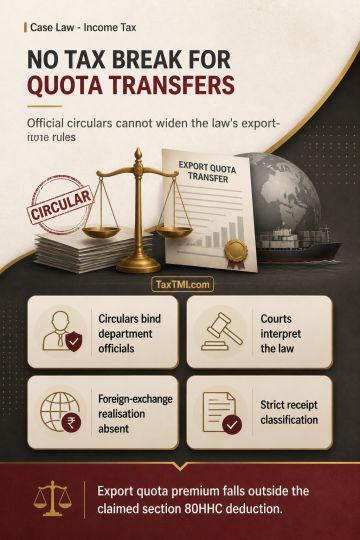
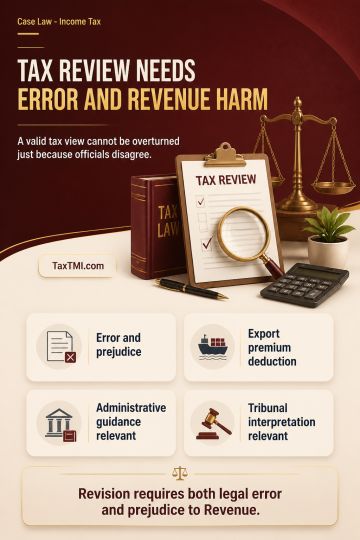
Revisional jurisdiction over export quota premium deductions requires both error and Revenue prejudice; a permissible assessment view cannot be displa...
Refund Claim: The appellant had inadvertently paid excess excise duty for the months of February and March 2013 while clearing goods from the factory to institutional buyers. Although new evidence is generally not permitted at the appellate stage, the Tribunal accepted the Chartered Accountant's statement and reconciliation sheet as these were department-prescribed documents for sanctioning refunds. The Tribunal observed that since the buyers had agreed to a pre-determined cum-duty price, the chances of passing on the excess excise duty were remote. Denying substantive benefits on technical grounds needs to be avoided. The Original Authority was directed to reconsider the refund claim after examining all documents submitted by the appellant.
Refund Claim: The appellant had inadvertently paid excess excise duty for the months of February and March 2013 while clearing goods from the factory to institutional buyers. Although new evidence is generally not permitted at the appellate stage, the Tribunal accepted the Chartered Accountant's statement and reconciliation sheet as these were department-prescribed documents for sanctioning refunds. The Tribunal observed that since the buyers had agreed to a pre-determined cum-duty price, the chances of passing on the excess excise duty were remote. Denying substantive benefits on technical grounds needs to be avoided. The Original Authority was directed to reconsider the refund claim after examining all documents submitted by the appellant.
Note: It is a system-generated summary and is for quick reference only.
 TaxTMI
  TaxTMI