Appellate jurisdiction over baggage imports is excluded, requiring confiscation challenges involving passenger-carried gold to proceed by statutory re...
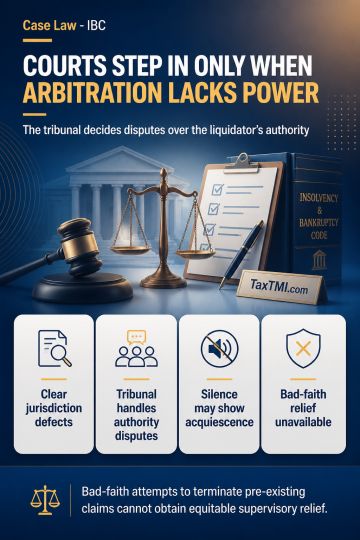
Article 227 review permits intervention in arbitration only for manifest, patent inherent jurisdictional defects, not representational authority dispu...
Validity of a complaint filed u/s 138 of the Negotiable Instruments Act through a Power of Attorney. The court held that it can quash complaints at the pre-trial stage u/s 482 of CrPC if unimpeachable material indicates the accused was not involved or no offense is made out. However, following the Supreme Court's ruling in Rathish Babu Unnikrishnan v. State, the court must examine whether the factual defense disproves the entire allegations. The complaint mentioned the authorized representative had personal knowledge and competence to file the case. While the petitioner raised questions about the attorney's capability, the extent of knowledge, and the validity of the compromise deed, these issues did not disprove the allegations and can be determined during trial after evidence is led. The court dismissed the petition, finding that the petitioner raised questions of fact and law better left for adjudication at the trial stage.
Validity of a complaint filed u/s 138 of the Negotiable Instruments Act through a Power of Attorney. The court held that it can quash complaints at the pre-trial stage u/s 482 of CrPC if unimpeachable material indicates the accused was not involved or no offense is made out. However, following the Supreme Court's ruling in Rathish Babu Unnikrishnan v. State, the court must examine whether the factual defense disproves the entire allegations. The complaint mentioned the authorized representative had personal knowledge and competence to file the case. While the petitioner raised questions about the attorney's capability, the extent of knowledge, and the validity of the compromise deed, these issues did not disprove the allegations and can be determined during trial after evidence is led. The court dismissed the petition, finding that the petitioner raised questions of fact and law better left for adjudication at the trial stage.
Note: It is a system-generated summary and is for quick reference only.
 TaxTMI
  TaxTMI
 of 4897