Customs exemptions cover photovoltaic assembly machinery and PVF backsheets, while fully declared cleared imports may avoid confiscation and penalties...
Specific tariff classification for LCD devices overrides treatment as electricity-meter parts, defeating differential duty, extended limitation, and p...
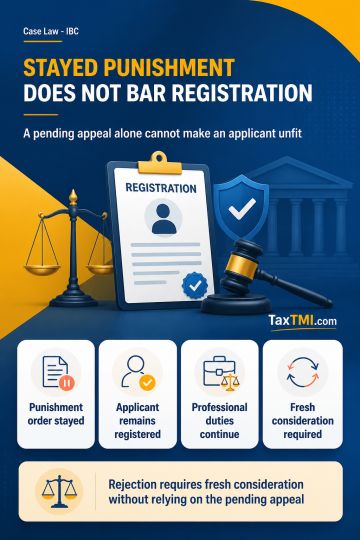
Stayed disciplinary punishment does not establish unfitness for insolvency professional registration; reconsideration must disregard mere pendency of ...
Indirect corporate control can create related-party status, excluding financial creditors from Committee of Creditors representation, participation an...
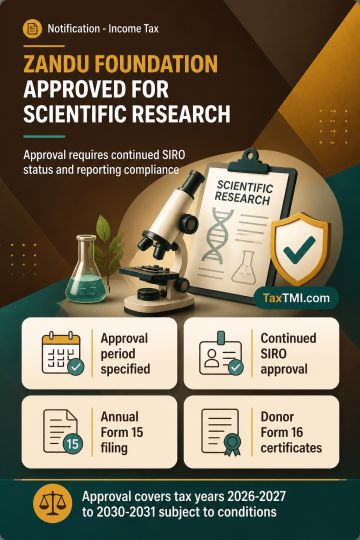
Scientific research association approval requires continuing SIRO status, annual donation reporting, and donor certificates for the approved foundatio...
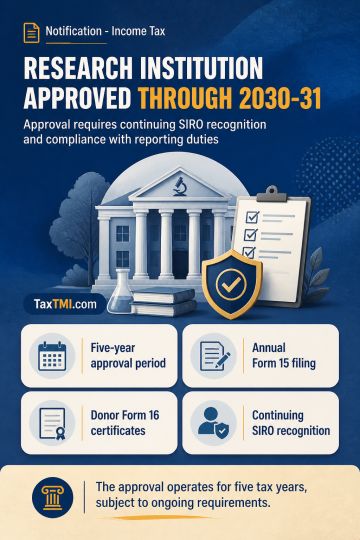
Scientific research institution approval is conditional on SIRO recognition, annual donation reporting, donor certification, and prescribed compliance...
This case deals with the maintainability of appeals filed by the Airports Economic Regulatory Authority (AERA) against orders of the Telecom Disputes Settlement and Appellate Tribunal (TDSAT) u/s 31 of the AERA Act. The key points are: AERA has a statutory duty to regulate tariffs for aeronautical services, considering various factors to ensure economically viable airports without compromising public interest. As AERA is interested in preserving public interest concerns animating the statute, it is a necessary party in appeals against its tariff orders before TDSAT. While judicial/quasi-judicial authorities are generally not impleaded as respondents in appeals against their orders, this principle is not absolute. The evolution of the fairness doctrine has transcended boundaries, and all administrative actions must comply with natural justice principles. Section 31 does not expressly confer the power to appeal on any party. However, at a minimum, parties to the appeal before the first appellate body (TDSAT) have the right to file an appeal before the Supreme Court. Since AERA is a necessary party before TDSAT, it can file appeals u/s 31. Consequently, the appeals filed by AERA against TDSAT orders u/s 31 of the AERA Act are maintainable.
This case deals with the maintainability of appeals filed by the Airports Economic Regulatory Authority (AERA) against orders of the Telecom Disputes Settlement and Appellate Tribunal (TDSAT) u/s 31 of the AERA Act. The key points are: AERA has a statutory duty to regulate tariffs for aeronautical services, considering various factors to ensure economically viable airports without compromising public interest. As AERA is interested in preserving public interest concerns animating the statute, it is a necessary party in appeals against its tariff orders before TDSAT. While judicial/quasi-judicial authorities are generally not impleaded as respondents in appeals against their orders, this principle is not absolute. The evolution of the fairness doctrine has transcended boundaries, and all administrative actions must comply with natural justice principles. Section 31 does not expressly confer the power to appeal on any party. However, at a minimum, parties to the appeal before the first appellate body (TDSAT) have the right to file an appeal before the Supreme Court. Since AERA is a necessary party before TDSAT, it can file appeals u/s 31. Consequently, the appeals filed by AERA against TDSAT orders u/s 31 of the AERA Act are maintainable.
Note: It is a system-generated summary and is for quick reference only.
 TaxTMI
  TaxTMI
 of 4879