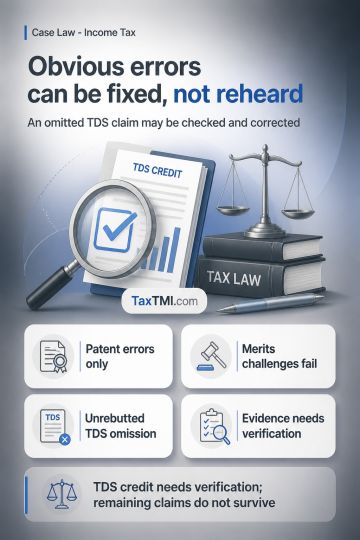
Unverified Insight Portal Information Cannot Justify Reassessment Without a Verified Taxpayer-Specific Income-Escape Nexus or Demonstrated Application...
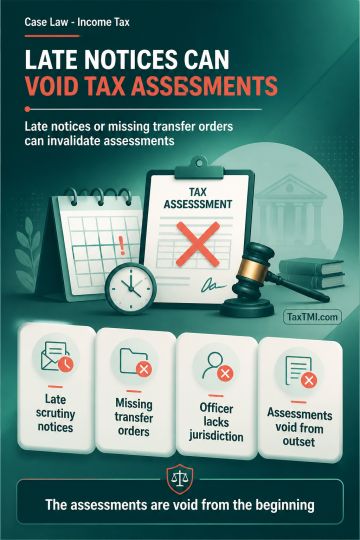
Assessing Officer jurisdiction after statutory transfer invalidates reassessment notices issued by transferor officers and nullifies resulting proceed...
Consequential appeal-effect orders must implement rectification deleting working-capital adjustments and reconsider the resulting arm's-length range c...
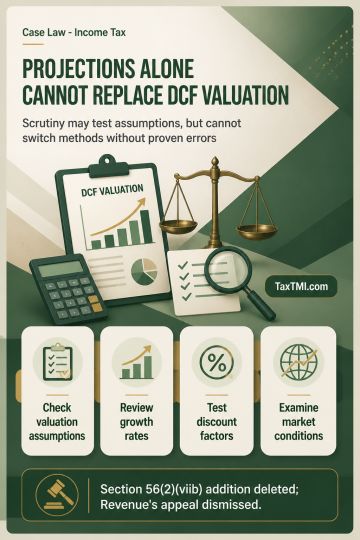
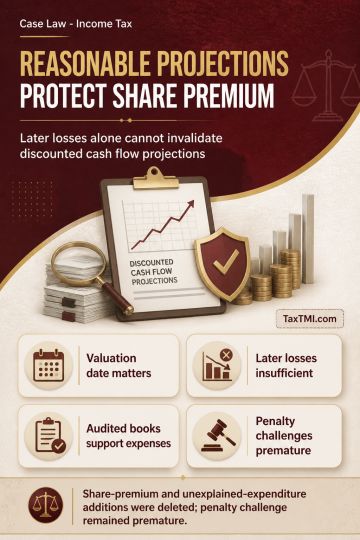
Discounted cash flow valuation protects share premium where projections are reasonable, while audited book expenses defeat unexplained-expenditure add...
Section 54 construction relief survives pre-transfer commencement when completion occurs within the statutory period, excluding ineligible spouse-owne...
This case deals with the maintainability of appeals filed by the Airports Economic Regulatory Authority (AERA) against orders of the Telecom Disputes Settlement and Appellate Tribunal (TDSAT) u/s 31 of the AERA Act. The key points are: AERA has a statutory duty to regulate tariffs for aeronautical services, considering various factors to ensure economically viable airports without compromising public interest. As AERA is interested in preserving public interest concerns animating the statute, it is a necessary party in appeals against its tariff orders before TDSAT. While judicial/quasi-judicial authorities are generally not impleaded as respondents in appeals against their orders, this principle is not absolute. The evolution of the fairness doctrine has transcended boundaries, and all administrative actions must comply with natural justice principles. Section 31 does not expressly confer the power to appeal on any party. However, at a minimum, parties to the appeal before the first appellate body (TDSAT) have the right to file an appeal before the Supreme Court. Since AERA is a necessary party before TDSAT, it can file appeals u/s 31. Consequently, the appeals filed by AERA against TDSAT orders u/s 31 of the AERA Act are maintainable.
This case deals with the maintainability of appeals filed by the Airports Economic Regulatory Authority (AERA) against orders of the Telecom Disputes Settlement and Appellate Tribunal (TDSAT) u/s 31 of the AERA Act. The key points are: AERA has a statutory duty to regulate tariffs for aeronautical services, considering various factors to ensure economically viable airports without compromising public interest. As AERA is interested in preserving public interest concerns animating the statute, it is a necessary party in appeals against its tariff orders before TDSAT. While judicial/quasi-judicial authorities are generally not impleaded as respondents in appeals against their orders, this principle is not absolute. The evolution of the fairness doctrine has transcended boundaries, and all administrative actions must comply with natural justice principles. Section 31 does not expressly confer the power to appeal on any party. However, at a minimum, parties to the appeal before the first appellate body (TDSAT) have the right to file an appeal before the Supreme Court. Since AERA is a necessary party before TDSAT, it can file appeals u/s 31. Consequently, the appeals filed by AERA against TDSAT orders u/s 31 of the AERA Act are maintainable.
Note: It is a system-generated summary and is for quick reference only.
 TaxTMI
  TaxTMI
 of 4886