Duplicate PAN allocation requires record verification and deactivation reasons before assessment-related transactions can be attributed to an assessee...
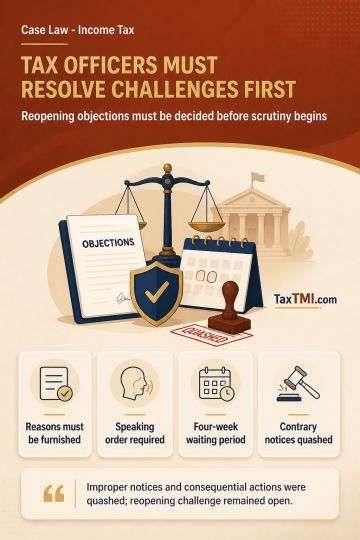
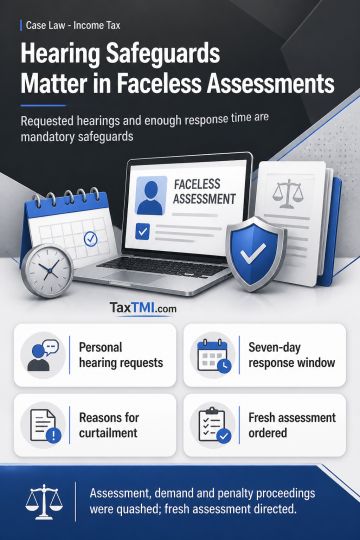
Faceless assessment safeguards require requested personal hearings and adequate final show-cause response time, failing which reassessment is required...
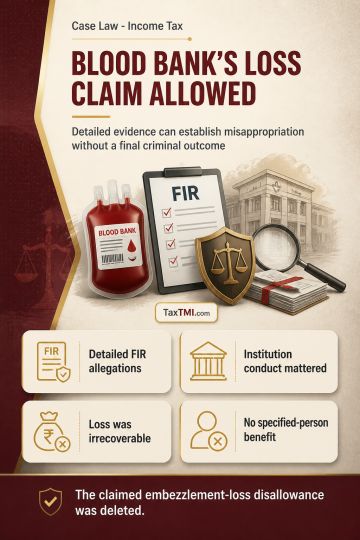
Embezzlement losses in charitable institutions remain allowable when misappropriation is established, irrecoverable, and not a specified-person benefi...
National long-distance undertaking status supports deduction where separately licensed infrastructure, resources, revenue, and expenditure establish c...
Agency reimbursement income follows contractual deposit-liability computation, while pending deposit collections do not constitute deemed-dividend loa...
Page of 4891
Press 'Enter' after typing page number.
201 to 220 of 97809 Results
❮
❯
❯❯
0 / 200
Expand Note
Add to Folder
No Folders have been created
+
Are you sure you want to delete "My most important" ?
This legal case pertains to the dishonor of a cheque and the presumption of innocence. The High Court held that the First Appellate Court erred in acquitting the accused solely on the ground that repeated presentation of the cheque and issuance of notice are not permissible. It cited a Supreme Court precedent allowing repeated presentation and successive notices, as long as the requirements u/s 138 of the Negotiable Instruments Act are satisfied. The High Court set aside the acquittal and remitted the matter to the First Appellate Court for fresh disposal, as the accused had no opportunity to get findings on other grounds raised before the First Appellate Court. The scope of appeal against conviction is wider than against acquittal, necessitating a fresh consideration by the lower court.
This legal case pertains to the dishonor of a cheque and the presumption of innocence. The High Court held that the First Appellate Court erred in acquitting the accused solely on the ground that repeated presentation of the cheque and issuance of notice are not permissible. It cited a Supreme Court precedent allowing repeated presentation and successive notices, as long as the requirements u/s 138 of the Negotiable Instruments Act are satisfied. The High Court set aside the acquittal and remitted the matter to the First Appellate Court for fresh disposal, as the accused had no opportunity to get findings on other grounds raised before the First Appellate Court. The scope of appeal against conviction is wider than against acquittal, necessitating a fresh consideration by the lower court.
Note: It is a system-generated summary and is for quick reference only.
 TaxTMI
  TaxTMI
 of 4891