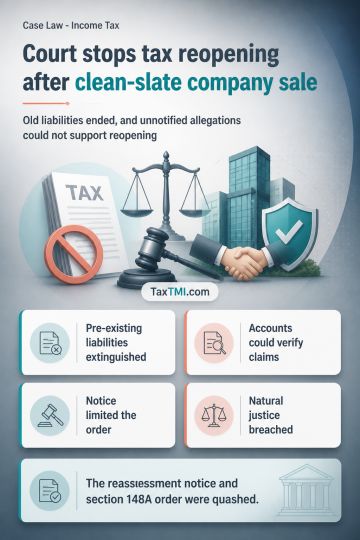
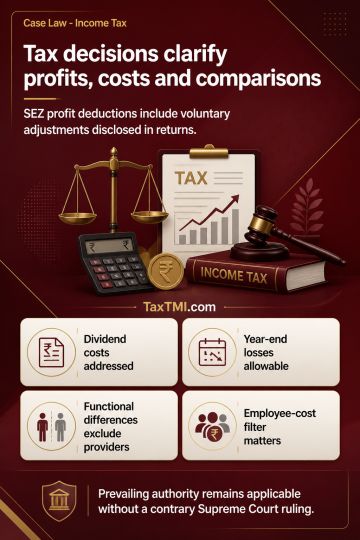
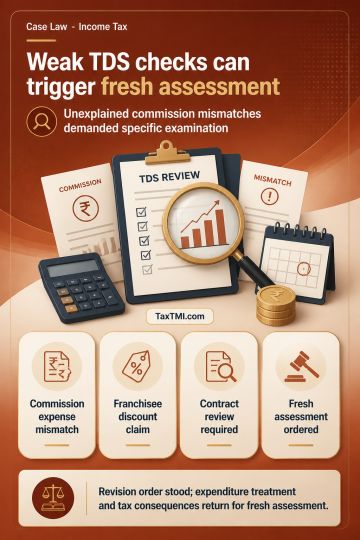
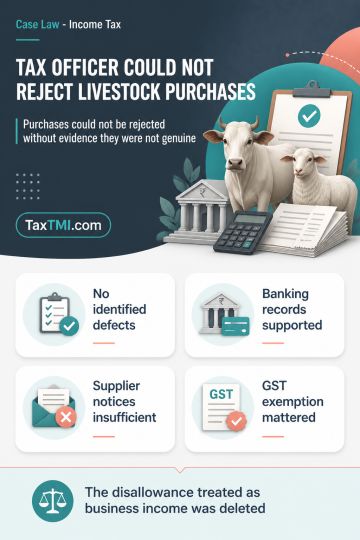
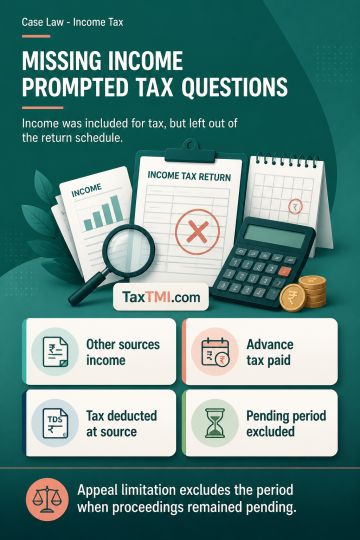
SEZ-unit profit deduction covers voluntary transfer-pricing adjustments, while exempt-income costs, foreign-exchange loss and ITeS comparables are exa...
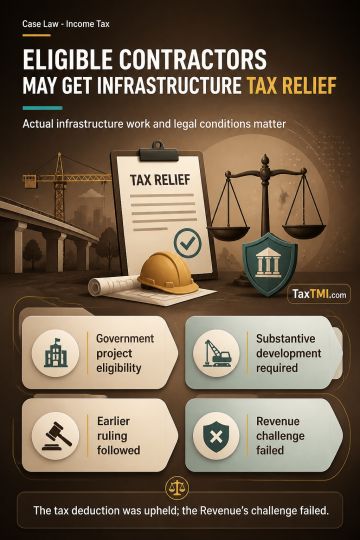
Infrastructure-development deduction remains available to EPC contractors when substantive statutory conditions outweigh contractor labels in agreemen...
The petitioner's application for GST refund, filed on 08.09.2020, was within the two-year limitation period prescribed u/s 54 of the CGST Act, 2017. The respondents initially treated this application as timely but later rejected a subsequent application dated 28.03.2020 as time-barred, despite it being a continuation of the original timely filed application. The respondents failed to justify their contradictory stance and provide cogent reasons for rejecting the claim. Their evasive objections and failure to address the original timely filed application led the Court to draw an adverse inference. Consequently, the deficiency memo issued by the Assistant Commissioner rejecting the refund claim was quashed, and the petition was allowed.
The petitioner's application for GST refund, filed on 08.09.2020, was within the two-year limitation period prescribed u/s 54 of the CGST Act, 2017. The respondents initially treated this application as timely but later rejected a subsequent application dated 28.03.2020 as time-barred, despite it being a continuation of the original timely filed application. The respondents failed to justify their contradictory stance and provide cogent reasons for rejecting the claim. Their evasive objections and failure to address the original timely filed application led the Court to draw an adverse inference. Consequently, the deficiency memo issued by the Assistant Commissioner rejecting the refund claim was quashed, and the petition was allowed.
Note: It is a system-generated summary and is for quick reference only.
 TaxTMI
  TaxTMI