Political contribution deductions require genuine transactions; banking records and party registration alone cannot defeat evidence of accommodation e...
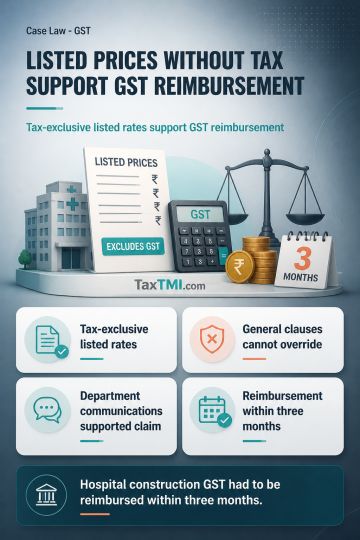
Post-death GST liability permits fresh proceedings against legal representatives, while discontinued-business recovery remains limited to the inherite...
Non-confirmation of FEMA seizure prevents adjudicators from overriding pending appellate findings on recorded reasons and suspected foreign asset hold...
The summary covers the key aspects of the Supreme Court's judgment, including the Court's findings on the following critical issues: The CBI primarily relied on the CAG's Audit Report as the starting point for initiating prosecution against the appellants, which cannot be accepted as decisive without parliamentary approval. The Karnataka High Court's judgment clarifying no criminality can be attributed to KECML based on the same facts is persuasive. The denial of sanctions by sanctioning authorities to prosecute senior KPCL officers involved in the same matter weakens the case against the appellants. The absence of a national policy for disposal of coal rejects and the agreements allowing KECML to dispose them safely without accounting to KPCL negate any criminal intent. KECML's decision to outsource coal washing was driven by compelling circumstances with KPCL's concurrence. The coal rejects lacked useful calorific value as per government laboratory reports. The High Court rightly exercised its inherent powers u/s 482 CrPC to prevent abuse of process. The Supreme Court's extraordinary powers under Article 136 allow it to correct errors, safeguard rights, and dispense justice, warranting interference in this case. The charges framed against the appellants stem from a predominantly civil dispute lacking criminal elements, leading the Court to quash the impugned orders.
The summary covers the key aspects of the Supreme Court's judgment, including the Court's findings on the following critical issues: The CBI primarily relied on the CAG's Audit Report as the starting point for initiating prosecution against the appellants, which cannot be accepted as decisive without parliamentary approval. The Karnataka High Court's judgment clarifying no criminality can be attributed to KECML based on the same facts is persuasive. The denial of sanctions by sanctioning authorities to prosecute senior KPCL officers involved in the same matter weakens the case against the appellants. The absence of a national policy for disposal of coal rejects and the agreements allowing KECML to dispose them safely without accounting to KPCL negate any criminal intent. KECML's decision to outsource coal washing was driven by compelling circumstances with KPCL's concurrence. The coal rejects lacked useful calorific value as per government laboratory reports. The High Court rightly exercised its inherent powers u/s 482 CrPC to prevent abuse of process. The Supreme Court's extraordinary powers under Article 136 allow it to correct errors, safeguard rights, and dispense justice, warranting interference in this case. The charges framed against the appellants stem from a predominantly civil dispute lacking criminal elements, leading the Court to quash the impugned orders.
Note: It is a system-generated summary and is for quick reference only.
 TaxTMI
  TaxTMI