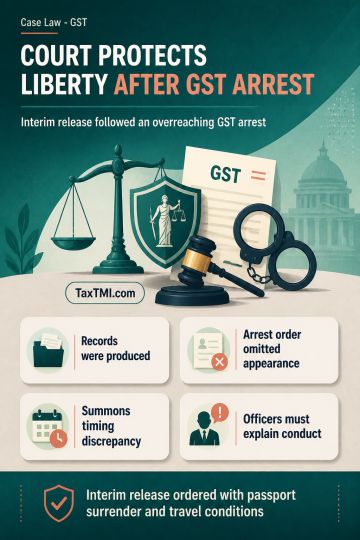
Personal liberty safeguards restrict arrest after court-directed GST appearance, requiring interim release where authorities overreach pending proceed...
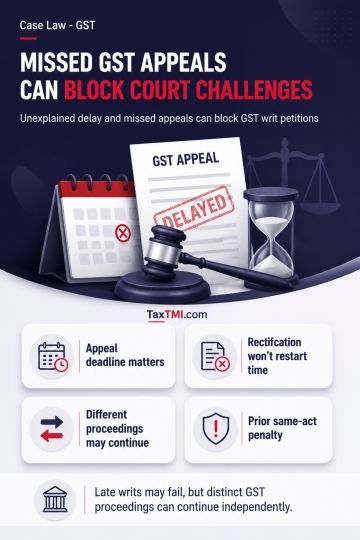
Alternative statutory remedy and delay bar GST writ challenges despite pending rectification, while distinct subject matter permits parallel proceedin...
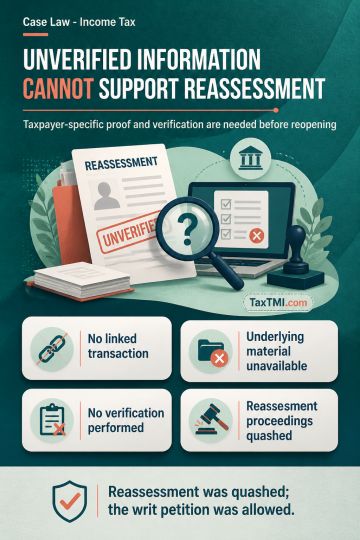
Unverified Insight Portal Information Cannot Justify Reassessment Without a Verified Taxpayer-Specific Income-Escape Nexus or Demonstrated Application...
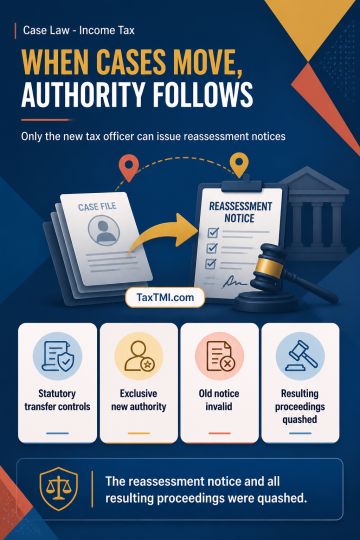
Assessing Officer jurisdiction after statutory transfer invalidates reassessment notices issued by transferor officers and nullifies resulting proceed...
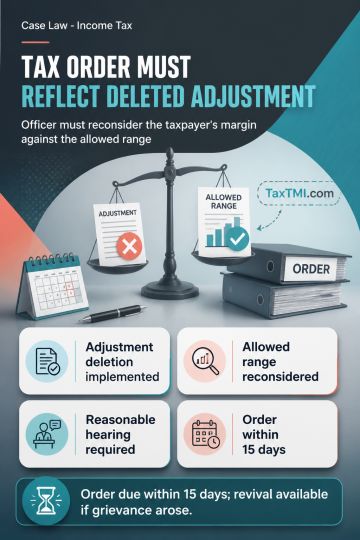
Consequential appeal-effect orders must implement rectification deleting working-capital adjustments and reconsider the resulting arm's-length range c...
The ITAT addressed a case involving a change in accounting policy from Percentage of Completion Method (POCM) to Project Completion Method (PCM) for revenue recognition. The assessee declared a net loss due to the change and the AO added the financial impact as profit, resulting in a significantly higher profit than industry average. The ITAT directed the AO to verify the impact in financial statements for both current and previous years, ensuring correct profit calculation. It emphasized that a change in accounting method does not imply profit understatement, as it is a legitimate decision guided by accounting standards. The ITAT upheld the assessee's right to choose the accounting method and instructed the AO to reevaluate the issue, allowing the assessee a fair opportunity to present their case. The assessee's grounds were allowed for statistical purposes.
The ITAT addressed a case involving a change in accounting policy from Percentage of Completion Method (POCM) to Project Completion Method (PCM) for revenue recognition. The assessee declared a net loss due to the change and the AO added the financial impact as profit, resulting in a significantly higher profit than industry average. The ITAT directed the AO to verify the impact in financial statements for both current and previous years, ensuring correct profit calculation. It emphasized that a change in accounting method does not imply profit understatement, as it is a legitimate decision guided by accounting standards. The ITAT upheld the assessee's right to choose the accounting method and instructed the AO to reevaluate the issue, allowing the assessee a fair opportunity to present their case. The assessee's grounds were allowed for statistical purposes.
Note: It is a system-generated summary and is for quick reference only.
 TaxTMI
  TaxTMI
 of 4894