Credit-note turnover adjustments preserve inverted-duty refunds, while ministerial re-computation does not constitute an impermissible appellate reman...
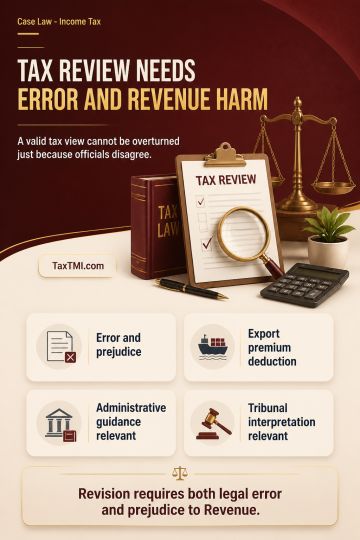
Revisional jurisdiction over export quota premium deductions requires both error and Revenue prejudice; a permissible assessment view cannot be displa...
Insolvency and BankruptcyJune 22, 2024Case LawsTri
The Tribunal addressed the maintainability of an application for initiation of Corporate Insolvency Resolution Process (CIRP) by an Operational Creditor (OC) against a Corporate Debtor (CD). The OC claimed default in payment by the CD but failed to provide invoices as evidence. Despite a demand notice under Section 8 of the IBC and a bank statement showing a partial payment, the Tribunal found the application time-barred as it was filed beyond the three-year limitation period from the alleged default date. The Tribunal emphasized the importance of proving debt and default before initiating CIRP, ultimately rejecting the application under Section 9 of the IBC.
The Tribunal addressed the maintainability of an application for initiation of Corporate Insolvency Resolution Process (CIRP) by an Operational Creditor (OC) against a Corporate Debtor (CD). The OC claimed default in payment by the CD but failed to provide invoices as evidence. Despite a demand notice under Section 8 of the IBC and a bank statement showing a partial payment, the Tribunal found the application time-barred as it was filed beyond the three-year limitation period from the alleged default date. The Tribunal emphasized the importance of proving debt and default before initiating CIRP, ultimately rejecting the application under Section 9 of the IBC.
Note: It is a system-generated summary and is for quick reference only.
 TaxTMI
  TaxTMI