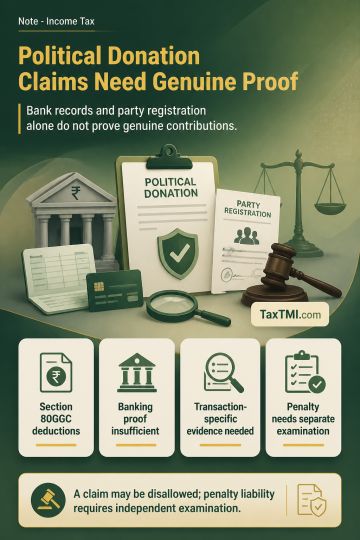
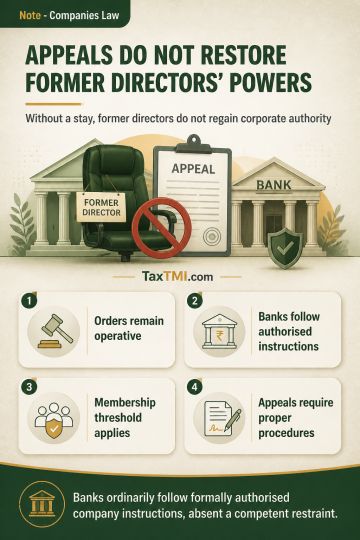
Political contribution deductions require genuine transactions; banking records and party registration alone cannot defeat evidence of accommodation e...
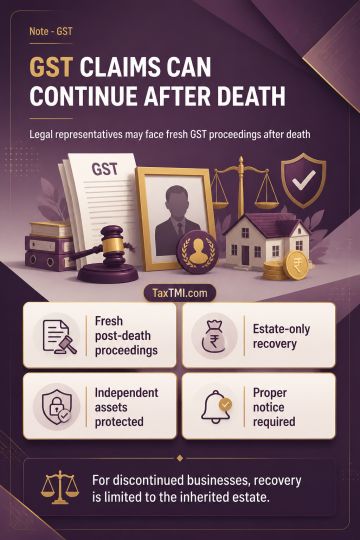
Post-death GST liability permits fresh proceedings against legal representatives, while discontinued-business recovery remains limited to the inherite...
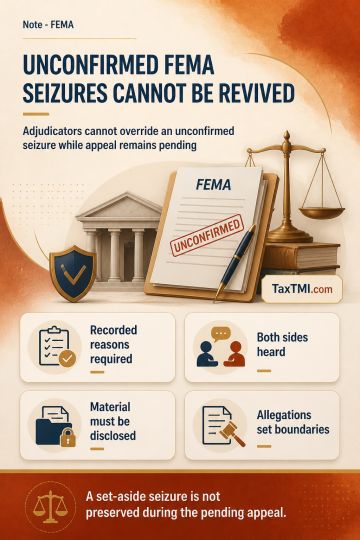
Non-confirmation of FEMA seizure prevents adjudicators from overriding pending appellate findings on recorded reasons and suspected foreign asset hold...
The case involved determining whether gains from the sale of shares allotted in an IPO should be classified as Short-Term Capital Gains (STCG) or business income. The principle of consistency was emphasized, with CBDT Circular stating that if shares are treated as investments, income from their transfer should be considered capital gains. The CBDT Circular aimed to reduce litigation and uncertainty. The Revenue's change in treatment without valid reason was deemed incorrect. Court precedents supported treating such gains as capital gains when shares were held as investments. The Revenue's classification of the gains as business income was overturned, and the gains were treated as STCG, following the principle of consistency. The appeal by the assessee was allowed.
The case involved determining whether gains from the sale of shares allotted in an IPO should be classified as Short-Term Capital Gains (STCG) or business income. The principle of consistency was emphasized, with CBDT Circular stating that if shares are treated as investments, income from their transfer should be considered capital gains. The CBDT Circular aimed to reduce litigation and uncertainty. The Revenue's change in treatment without valid reason was deemed incorrect. Court precedents supported treating such gains as capital gains when shares were held as investments. The Revenue's classification of the gains as business income was overturned, and the gains were treated as STCG, following the principle of consistency. The appeal by the assessee was allowed.
Note: It is a system-generated summary and is for quick reference only.
 TaxTMI
  TaxTMI