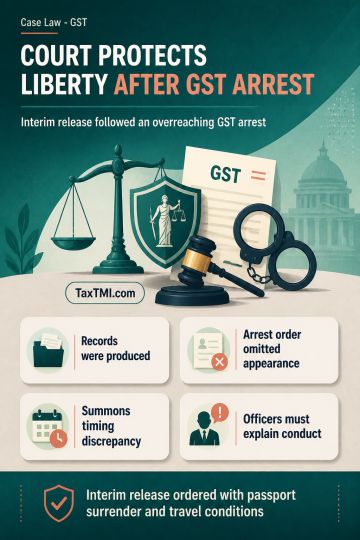
Personal liberty safeguards restrict arrest after court-directed GST appearance, requiring interim release where authorities overreach pending proceed...
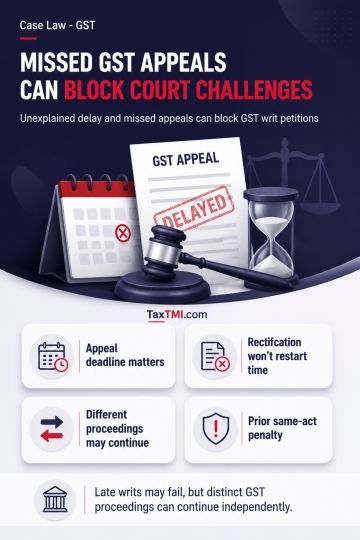
Alternative statutory remedy and delay bar GST writ challenges despite pending rectification, while distinct subject matter permits parallel proceedin...
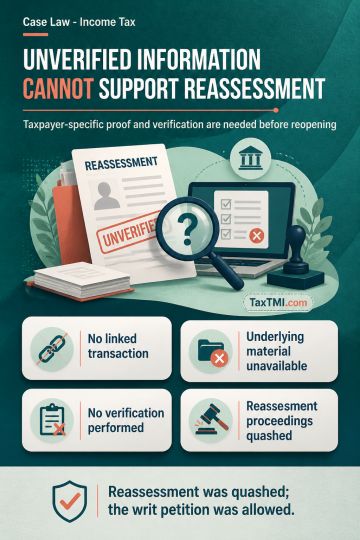
Unverified Insight Portal Information Cannot Justify Reassessment Without a Verified Taxpayer-Specific Income-Escape Nexus or Demonstrated Application...
Assessing Officer jurisdiction after statutory transfer invalidates reassessment notices issued by transferor officers and nullifies resulting proceed...
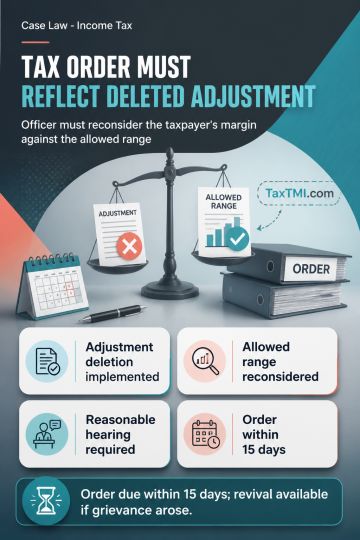
Consequential appeal-effect orders must implement rectification deleting working-capital adjustments and reconsider the resulting arm's-length range c...
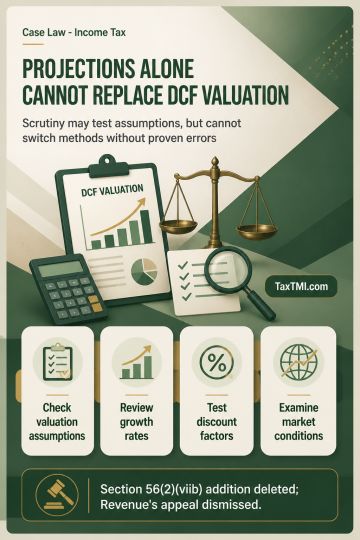
Discounted cash flow valuation protects share premium where projections are reasonable, while audited book expenses defeat unexplained-expenditure add...
CESTAT Mumbai analyzed the case involving 'API supari' to determine the rate of duty and the applicability of Advance Ruling u/s 28J of Customs Act, 1962. The tribunal emphasized the jurisdictional limits of Advance Rulings and the burden of proof in classification. It clarified that Customs Authority for Advance Rulings (CAAR) does not enforce rulings and cannot limit their applicability. The ruling's binding nature on the applicant and customs administration was highlighted. The tribunal criticized the adjudicating authority for disregarding the advance ruling and failing to follow proper classification procedures. It noted the importance of consistent classification for tax policy formulation and criticized the lack of detailed scrutiny in the impugned order. The tribunal rejected the impugned order due to the adjudicating authority's failure to adhere to legal principles and set it aside, allowing the appeals.
CESTAT Mumbai analyzed the case involving 'API supari' to determine the rate of duty and the applicability of Advance Ruling u/s 28J of Customs Act, 1962. The tribunal emphasized the jurisdictional limits of Advance Rulings and the burden of proof in classification. It clarified that Customs Authority for Advance Rulings (CAAR) does not enforce rulings and cannot limit their applicability. The ruling's binding nature on the applicant and customs administration was highlighted. The tribunal criticized the adjudicating authority for disregarding the advance ruling and failing to follow proper classification procedures. It noted the importance of consistent classification for tax policy formulation and criticized the lack of detailed scrutiny in the impugned order. The tribunal rejected the impugned order due to the adjudicating authority's failure to adhere to legal principles and set it aside, allowing the appeals.
Note: It is a system-generated summary and is for quick reference only.
 TaxTMI
  TaxTMI