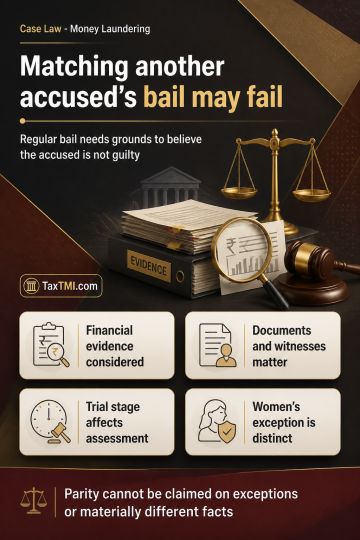
Reassessment for unreturned property sales survives where transfer information, non-filing, and unsupported exemption claims establish a prima facie l...
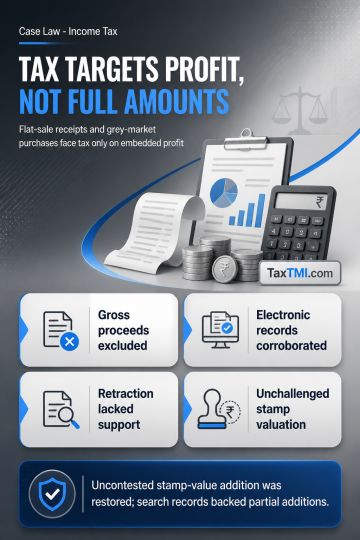
Profit-element taxation limits additions for unaccounted flat-sale receipts and grey-market purchases, while reliable search records support partial a...
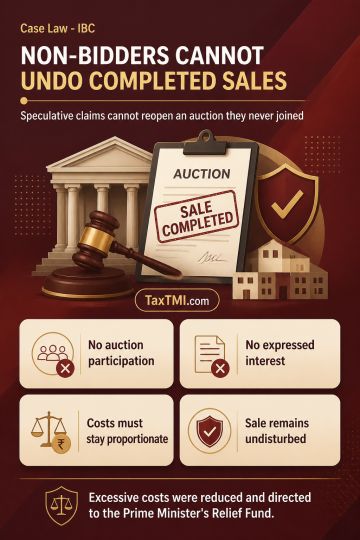
Non-participating bidders cannot disturb concluded liquidation sales on speculative prejudice, while costs for such challenges must remain proportiona...
The ITAT Delhi held that the CIT(A) erred in not conducting a proper enquiry into the unexplained credit u/s 68. The AO and CIT(A) have a duty to investigate thoroughly. The CIT(A) should not have dismissed the AO's concerns without further enquiry. The creditworthiness of the share applicant was not proven, and the CIT(A) failed to consider vital aspects. The order of the CIT(A) was set aside for proper re-examination. Section 251 grants wide powers to the CIT(A) to enhance assessments. The CIT(A) has extraordinary powers to examine all aspects of an issue. The CIT(A) should have conducted necessary inquiries to determine taxability accurately. The appeal of the Revenue was allowed for statistical purposes.
The ITAT Delhi held that the CIT(A) erred in not conducting a proper enquiry into the unexplained credit u/s 68. The AO and CIT(A) have a duty to investigate thoroughly. The CIT(A) should not have dismissed the AO's concerns without further enquiry. The creditworthiness of the share applicant was not proven, and the CIT(A) failed to consider vital aspects. The order of the CIT(A) was set aside for proper re-examination. Section 251 grants wide powers to the CIT(A) to enhance assessments. The CIT(A) has extraordinary powers to examine all aspects of an issue. The CIT(A) should have conducted necessary inquiries to determine taxability accurately. The appeal of the Revenue was allowed for statistical purposes.
Note: It is a system-generated summary and is for quick reference only.
 TaxTMI
  TaxTMI
 of 4891