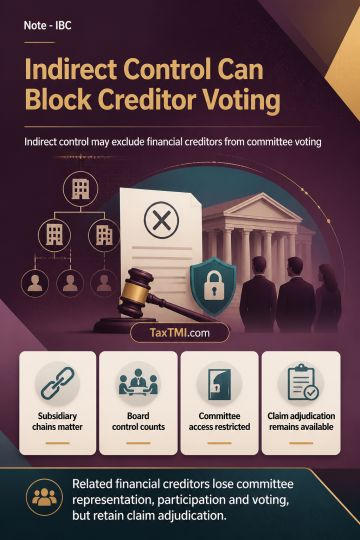
Indirect corporate control can create related-party status, excluding financial creditors from Committee of Creditors representation, participation an...
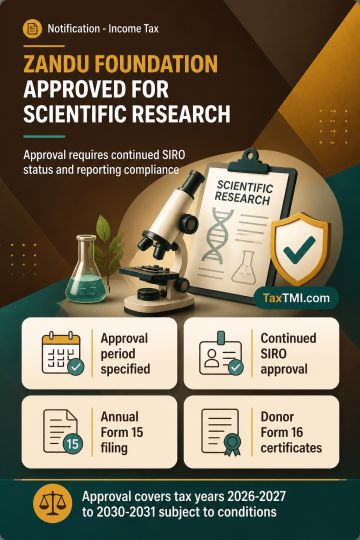
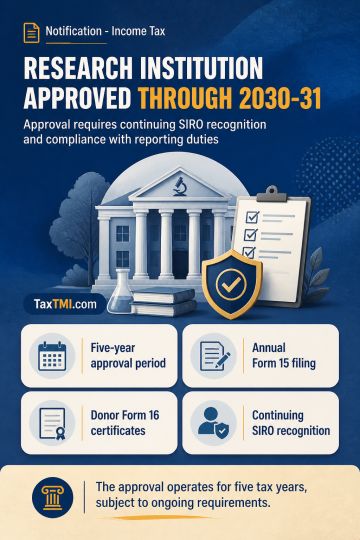
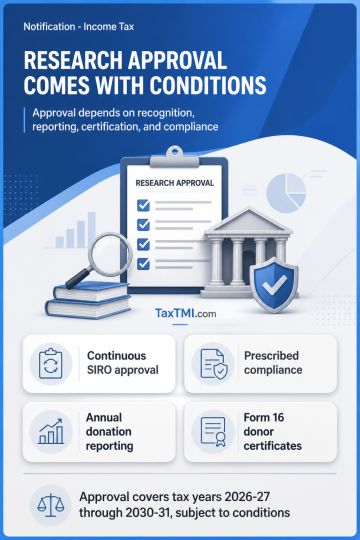
Scientific research association approval requires continuing SIRO status, annual donation reporting, and donor certificates for the approved foundatio...
Scientific research institution approval is conditional on SIRO recognition, annual donation reporting, donor certification, and prescribed compliance...
The CLB, under Section 10E of the Companies Act, 1956, was found to lack the power to punish for contempt of its order. - The power to punish for contempt of the CLB's order was discussed in relation to Section 425 of the Act, which does not grant the CLB such authority. - The jurisdiction of the CLB to issue contempt notice was analyzed based on Section 434(1)(a) of the Act, which transfers pending matters to the Tribunal. - The doctrine of merger was applied, stating that the CLB's order had merged with the Guwahati High Court's order due to subsequent appeals. - The directors' appeal was allowed, with the Tribunal noting their lack of control over the Company's affairs but holding them bound by the order until payment to 3A Capital is made.
The CLB, under Section 10E of the Companies Act, 1956, was found to lack the power to punish for contempt of its order. - The power to punish for contempt of the CLB's order was discussed in relation to Section 425 of the Act, which does not grant the CLB such authority. - The jurisdiction of the CLB to issue contempt notice was analyzed based on Section 434(1)(a) of the Act, which transfers pending matters to the Tribunal. - The doctrine of merger was applied, stating that the CLB's order had merged with the Guwahati High Court's order due to subsequent appeals. - The directors' appeal was allowed, with the Tribunal noting their lack of control over the Company's affairs but holding them bound by the order until payment to 3A Capital is made.
Note: It is a system-generated summary and is for quick reference only.
 TaxTMI
  TaxTMI