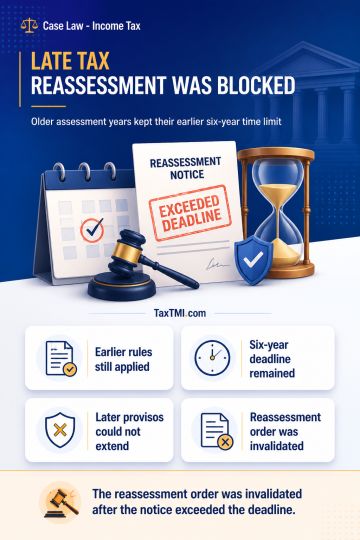
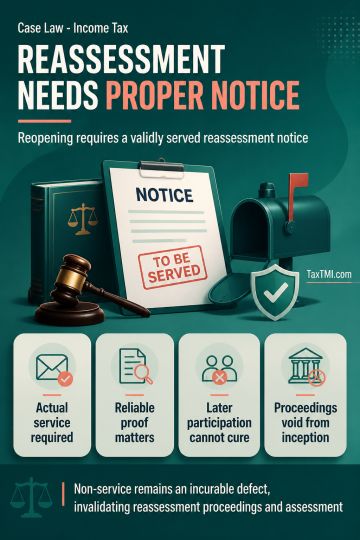
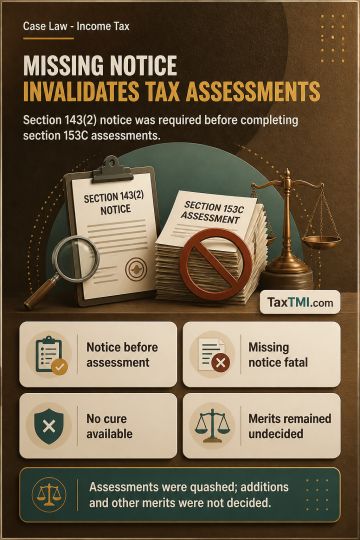
Pre-amendment reassessment limitation bars late notices under the preserved regime, invalidating consequential reassessment for affected earlier asses...
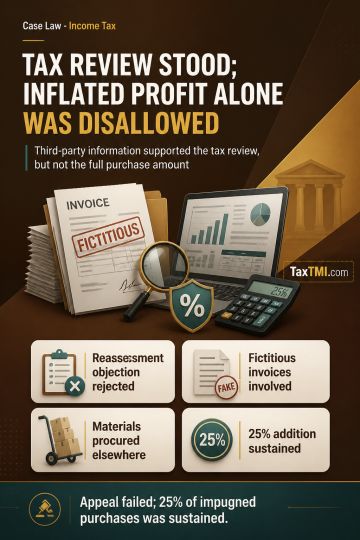
Cash-sales explanations for bank deposits require documentary reconciliation; reassessment notice survived where effective response time was available...
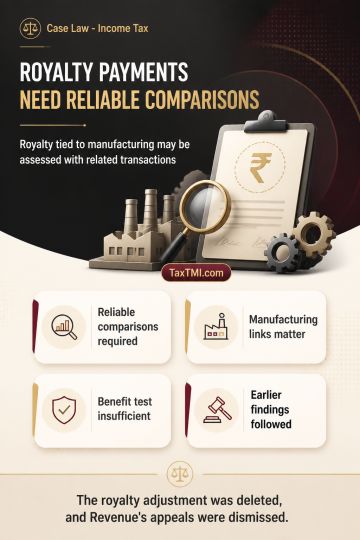
Functional comparability in transfer pricing prevents ad hoc arm's length adjustments where functions, assets, risks and reliable comparables are unes...
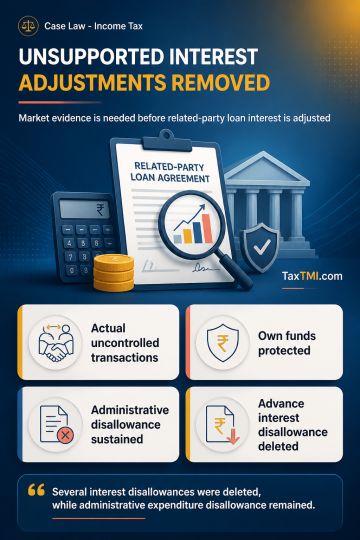
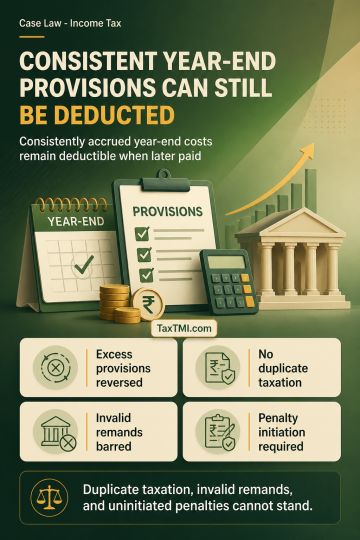
Contingency expenses, exempt-income disallowance, and royalty benchmarking: unsupported adjustments were deleted under consistent accounting and trans...
Validity of order of High Court remanding back the Matter to the Tribunal for re-consideration - Failure of the Department to follow the instructions given by the CESTAT - Doctrine of Merger - The High Court, in its judgment, refutes the appellant's claim of non-furnishing of a letter dated 20.01.2001, stating that the letter originated from the appellant itself and was not relied upon by the authority to draw adverse inferences. Therefore, the failure to provide it does not prejudice the appellant's case. The Court also acknowledges the lack of legal validity in the order of review passed on 08.03.2010 but refrains from setting aside the impugned order. Instead, it remands the matter back to the tribunal for fresh adjudication, allowing both parties to present their arguments. The appeals are disposed of with no costs imposed.
Validity of order of High Court remanding back the Matter to the Tribunal for re-consideration - Failure of the Department to follow the instructions given by the CESTAT - Doctrine of Merger - The High Court, in its judgment, refutes the appellant's claim of non-furnishing of a letter dated 20.01.2001, stating that the letter originated from the appellant itself and was not relied upon by the authority to draw adverse inferences. Therefore, the failure to provide it does not prejudice the appellant's case. The Court also acknowledges the lack of legal validity in the order of review passed on 08.03.2010 but refrains from setting aside the impugned order. Instead, it remands the matter back to the tribunal for fresh adjudication, allowing both parties to present their arguments. The appeals are disposed of with no costs imposed.
Note: It is a system-generated summary and is for quick reference only.
 TaxTMI
 TaxTMI

 of 4921