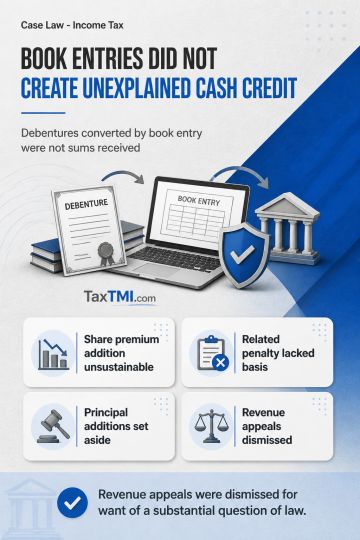
Credit-note turnover adjustments preserve inverted-duty refunds, while ministerial re-computation does not constitute an impermissible appellate reman...
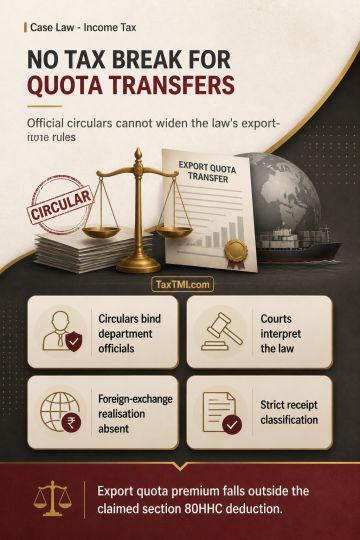
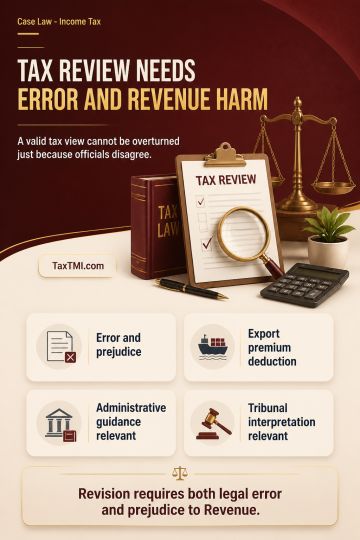
Revisional jurisdiction over export quota premium deductions requires both error and Revenue prejudice; a permissible assessment view cannot be displa...
Jurisdiction - Constitutional Validity of Rule 9(3)(b) of the Chartered Accountants’ (Procedure of Investigation of Professional and Other Misconduct and Conduct of Cases) Rules, 2007 - While dismissing the appeal, The Apex Court concluded that the rule, which allows the Board of Discipline to proceed further or refer the matter to the Disciplinary Committee even when the Director (Discipline) finds no prima facie case of misconduct, is consistent with the general power to make rules under Section 29A(1) of the Chartered Accountants Act, 1949. - This ensures that complaints of professional misconduct are thoroughly examined, aligning with the Act's objective to maintain ethical standards within the profession.
Jurisdiction - Constitutional Validity of Rule 9(3)(b) of the Chartered Accountants’ (Procedure of Investigation of Professional and Other Misconduct and Conduct of Cases) Rules, 2007 - While dismissing the appeal, The Apex Court concluded that the rule, which allows the Board of Discipline to proceed further or refer the matter to the Disciplinary Committee even when the Director (Discipline) finds no prima facie case of misconduct, is consistent with the general power to make rules under Section 29A(1) of the Chartered Accountants Act, 1949. - This ensures that complaints of professional misconduct are thoroughly examined, aligning with the Act's objective to maintain ethical standards within the profession.
Note: It is a system-generated summary and is for quick reference only.
 TaxTMI
  TaxTMI