Section 54 construction relief survives pre-transfer commencement when completion occurs within the statutory period, excluding ineligible spouse-owne...
Fraud classification show-cause notices founded on inconclusive forensic audit material cannot sustain action, permitting fresh proceedings on conclus...
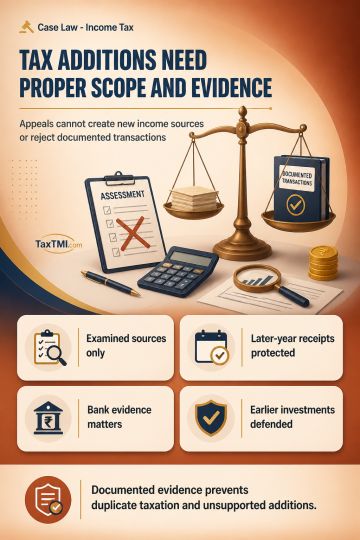
Appellate enhancement limits protect against new income sources, while documented credits and prior-year investments resist unexplained-income additio...
Page of 4870
Press 'Enter' after typing page number.
21 to 40 of 97383 Results
❮
❯
❯❯
0 / 200
Expand Note
Add to Folder
No Folders have been created
+
Are you sure you want to delete "My most important" ?
Nature of receipt - amount received under the Deed for restrictive covenant - revenue or capital receipt - ITAT, CIT and the AO have proceeded on an erroneous footing that the company came into existence only on 22nd June, 2000 and the assessee was inducted into its employment on 30th June, 2000 and therefore it was not feasible and it is inconceivable that appellant can be a privy to the business secrets of the company within a period of eight days of his employment. The deed of negative covenant does not provide or even indicate that appellant was privy to the business secrets of the company within a period of eight days - No material has been brought on record to show that the negative covenant agreement is a sham agreement. - HC
Nature of receipt - amount received under the Deed for restrictive covenant - revenue or capital receipt - ITAT, CIT and the AO have proceeded on an erroneous footing that the company came into existence only on 22nd June, 2000 and the assessee was inducted into its employment on 30th June, 2000 and therefore it was not feasible and it is inconceivable that appellant can be a privy to the business secrets of the company within a period of eight days of his employment. The deed of negative covenant does not provide or even indicate that appellant was privy to the business secrets of the company within a period of eight days - No material has been brought on record to show that the negative covenant agreement is a sham agreement. - HC
Note: It is a system-generated summary and is for quick reference only.
 TaxTMI
  TaxTMI
 of 4870