Restaurant business transfers qualify for GST exemption as going concerns when operations can continue independently despite retained past liabilities...
Voluntary customs statements and seizure evidence support penalties for attempted export of red sanders where alleged retractions remain unsubstantiat...
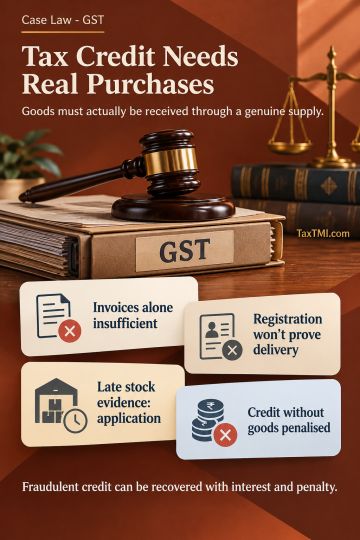
Input tax credit requires the claimant to establish actual receipt of goods and payment to the Government of the tax charged on the supply. Section 155 places the burden of proving entitlement on the claimant. Where a supplier is found non-existent, invoices, e-way bills, banking entries, lorry receipts and photographs without verifiable dates or coordinates may not establish physical supply without independent, verifiable evidence. Payment to the supplier does not satisfy the separate requirement that tax be paid to the Government, whether in cash or through admissible input tax credit. Failure to establish either condition can result in denial of credit.
Input tax credit requires the claimant to establish actual receipt of goods and payment to the Government of the tax charged on the supply. Section 155 places the burden of proving entitlement on the claimant. Where a supplier is found non-existent, invoices, e-way bills, banking entries, lorry receipts and photographs without verifiable dates or coordinates may not establish physical supply without independent, verifiable evidence. Payment to the supplier does not satisfy the separate requirement that tax be paid to the Government, whether in cash or through admissible input tax credit. Failure to establish either condition can result in denial of credit.
Note: It is a system-generated summary and is for quick reference only.
 TaxTMI




 Get Daily Updates





