Jurisdictional sanction requirements bar reassessment when approval comes from an authority lacking statutory competence under the applicable framewor...
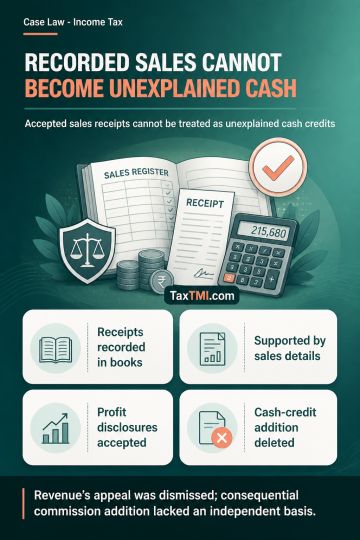
Recorded sales receipts cannot be reassessed as unexplained cash credits, eliminating the basis for consequential alleged commission expenditure addit...
Sufficient cause for delayed income-tax appeals requires bona fide diligence; unsubstantiated counsel illness and assessee inaction defeat condonation...
TNMM Segmentation Limits Transfer-Pricing Adjustments to Associated-Enterprise Transactions and Requires Turnover-Based Comparable Selection for IT Se...
Internal TNMM supports deletion of freight-forwarding adjustments where comparable non-AE transactions are separately identifiable and materially simi...
Condonation of delay in filing a first income-tax appeal...
Sufficient cause for delayed income-tax appeals requires bona fide diligence; unsubstantiated counsel illness and assessee inaction defeat condonation.
Contents
Summary
Note
Bookmark
Share
✓ Copied successfully !
Print
Print Options
For full text, please login
Login to TaxTMI
Verification Pending
The Email Id has not been verified. Click on the link we have sent on
Condonation of delay in filing a first income-tax appeal requires a bona fide, reasonable explanation supported by material; inaction, negligence and lack of diligence defeat sufficient cause. Counsel's asserted illness, particularly after resuming work, remained unsubstantiated, while the assessee's non-cooperation during assessment supported the finding that counsel was not solely responsible for the delay. Concurrent factual findings refusing condonation were not perverse and could not be reappreciated where no substantial question of law arose. The delayed appeal was therefore not entertained and was dismissed.
Condonation of delay in filing a first income-tax appeal requires a bona fide, reasonable explanation supported by material; inaction, negligence and lack of diligence defeat sufficient cause. Counsel's asserted illness, particularly after resuming work, remained unsubstantiated, while the assessee's non-cooperation during assessment supported the finding that counsel was not solely responsible for the delay. Concurrent factual findings refusing condonation were not perverse and could not be reappreciated where no substantial question of law arose. The delayed appeal was therefore not entertained and was dismissed.
Note: It is a system-generated summary and is for quick reference only.
 TaxTMI
 TaxTMI